 Skip to content
Home » 8 Best Solar Generators in 2026 (Ultimate Picks for Every Need)
8 Best Solar Generators in 2026 (Ultimate Picks for Every Need)

- Credit: Bluetti
The Power Never Has to Go Out
Picture losing power at night — the lights cut out, the fridge stops humming, your phone’s at 2%. Now picture pressing one button and the essentials come back on, silently, powered by a battery that’s been charging off sunlight all day.
That’s the appeal driving more people toward solar generators every year — clean, quiet backup power whether you’re at home, camping, or living somewhere the grid doesn’t reliably reach. But “best solar generator” means something different depending on what you’re actually trying to do. A unit built for whole-home backup is overkill for weekend camping; a $300 unit that’s perfect for charging phones won’t touch a refrigerator.
This guide rounds up eight standout picks across the categories that matter most — home backup, off-grid living, RVs, and budget-friendly everyday use — so you can find the right match for your specific situation rather than sorting through specs built for someone else’s needs.
Quick Answer
- Best Overall: EcoFlow Delta Pro
- Best for Off-Grid Living: Bluetti AC200MAX
- Best for Durability & Long-Term Value: Anker SOLIX F2000
- Best for Scalable Home & RV Use: Jackery Explorer 2000 Plus
- Best for Home Backup Security: Geneverse HomePower TWO PRO
- Best High-Capacity Budget Pick: ALLPOWERS R3500
- Best for Whole-House Smart Backup: Zendure SuperBase V4600
- Best Under $500: Jackery Explorer 300
Best Overall
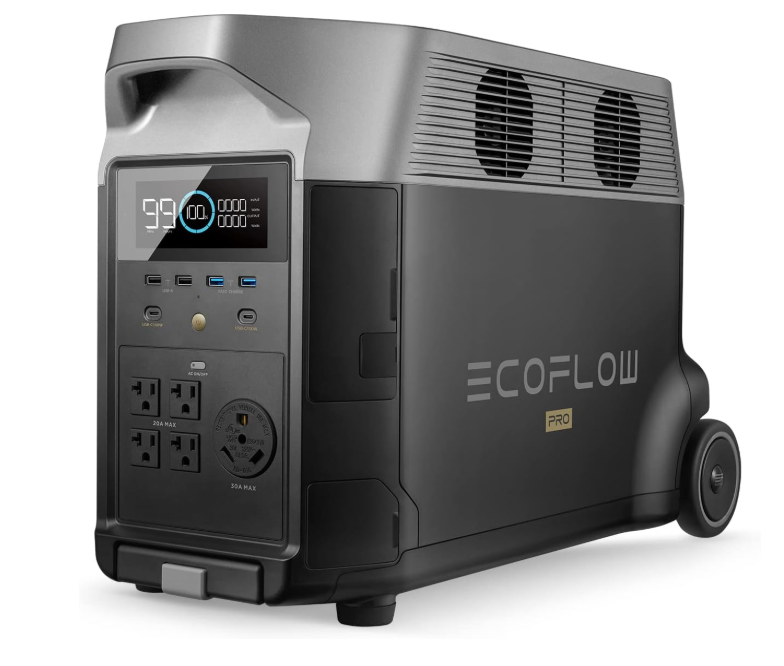
EcoFlow DELTA Pro
- 7,200W surge watts
- 3,600W running watts
- 3,600Wh (expandable)
- 99 lbs (44.90 kg)
Best for Home Backup
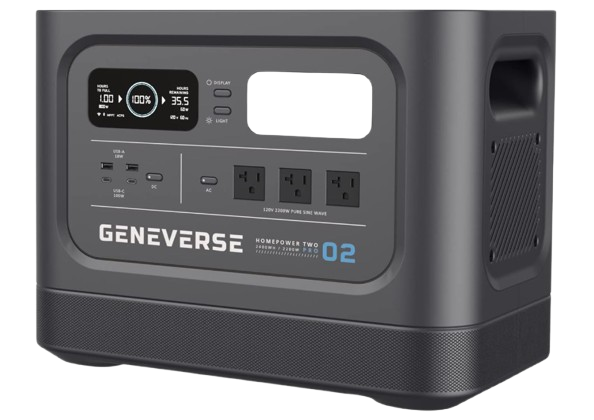
Geneverse HomePower TWO PRO
- 4,400 W surge watts
- 2,200 W running watts
- 2,419 Wh capacity
- 61.3 lbs (27.8 kg)
Best for Camping
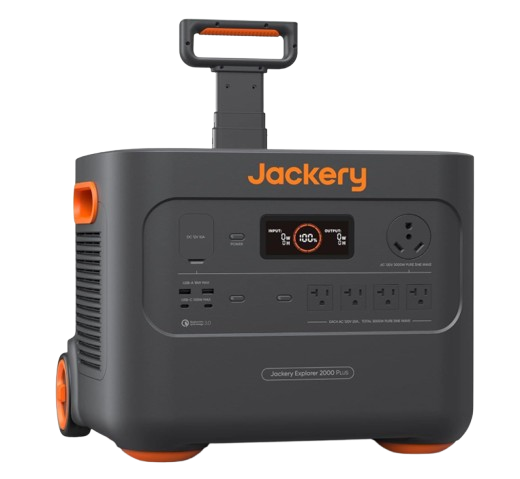
Jackery Explorer 2000 Plus
- 6,000W surge watts
- 3,000W running watts
- 2,042Wh(expandable)
- 61.5 lbs / 27.9 kg
Best Overall
EcoFlow DELTA Pro
- 7,200W surge watts
- 3,600W running watts
- 3,600Wh (expandable)
- 99 lbs (44.90 kg)
Best for Home Backup
Geneverse HomePower TWO PRO
- 4,400 W surge watts
- 2,200 W running watts
- 2,419 Wh capacity
- 61.3 lbs (27.8 kg)
Best for Camping
Jackery Explorer 2000 Plus
- 6,000W surge watts
- 3,000W running watts
- 2,042Wh(expandable)
- 61.5 lbs / 27.9 kg
If there’s one unit that redefines what portable power can do, it’s the Delta Pro — the gold standard for home backup that also scales into a genuinely versatile off-grid or RV system.
Pros
- Industry-leading 3,600W AC output (7,200W surge)
- Expandable to 25,000Wh total capacity
- Fast solar charging — 3–4 hours with 1,200W of solar input
- Smart app control for real-time monitoring
- LiFePO4 battery rated for a decade-plus of use
cons
- Pricey upfront investment
- Heavy at 99 lbs, even with wheels
- Extra batteries and accessories add to the total cost
Why We Picked It?

- Credit: EcoFlow
At 3,600Wh base capacity (expandable to 25,000Wh), it can run a refrigerator, sump pump, CPAP machine, router, and even small AC units for extended stretches, with 3,600W of continuous output handling nearly any household appliance you’d need during an outage. Its LiFePO4 battery is rated for 3,500+ cycles, which is why it’s become a go-to recommendation across the solar generator space, not just on this list.
Charging is genuinely fast for a unit this size — paired with EcoFlow’s 400W solar panels, a full recharge in 3–4 hours of good sun is realistic. It also accepts AC, EV station, or gas generator input, making it one of the more versatile hybrid charging setups available.
Performance & Solar Charging

- Credit: EcoFlow
When paired with EcoFlow’s 400W solar panels, the DELTA Pro can recharge in as little as 3–4 hours under full sunlight — an incredible rate for a system this large. You can also charge it via AC, EV station, or even a gas generator if needed, making it the most versatile hybrid power station on the market.
Whether you’re running it off-grid or using it as a whole-home emergency power hub, the DELTA Pro’s smart energy management app helps you track input, output, and battery status in real time.
Practical Usability
Despite its massive capacity, EcoFlow nailed portability with built-in wheels and a telescopic handle. It’s heavy (around 99 lbs), but you can roll it just like luggage — ideal for RV trips, off-grid cabins, or job sites.
Its modular design means you can start small and expand later, making it an excellent long-term investment for anyone serious about sustainable, independent energy.
Key Specifications
- Battery Capacity: 3,600 Wh (expandable to 25,000 Wh)
- Battery Type: LiFePO4
- Weight: 99 lbs (44.9 kg)
- AC Output: 3,600W (7,200W surge)
- Solar Input: Up to 1,200W
- Charging Time: 3–4 hours (solar), 2.7 hrs (AC)
- Who should buy it: Homeowners who want maximum flexibility and are willing to pay for it
- Who should skip it: Buyers who mainly need lighter backup — the Anker F2000 or Geneverse HomePower TWO PRO cover more modest needs for less
💬 Real-World Takeaway
- Credit: EcoFlow
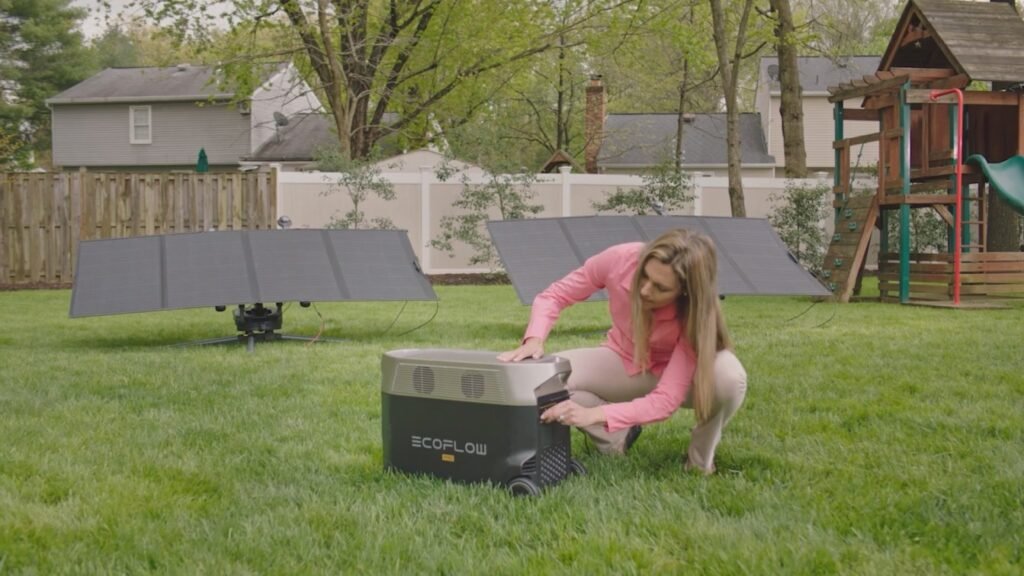
If you’re looking for the best solar generator for home use or whole-house backup, the EcoFlow DELTA Pro stands unmatched in 2026. It’s a future-ready system built for both convenience and crisis — perfect for those who want true energy independence without relying on noisy gas generators.
Quick Tip: Pair your DELTA Pro with two 400W solar panels for all-day off-grid use — enough to keep essential appliances like your refrigerator, lights, and Wi-Fi powered indefinitely.
Get yours now and secure your energy independence.
Want to learn more about EcoFlow Delta Pro? Read our full EcoFlow Delta Pro Review here.
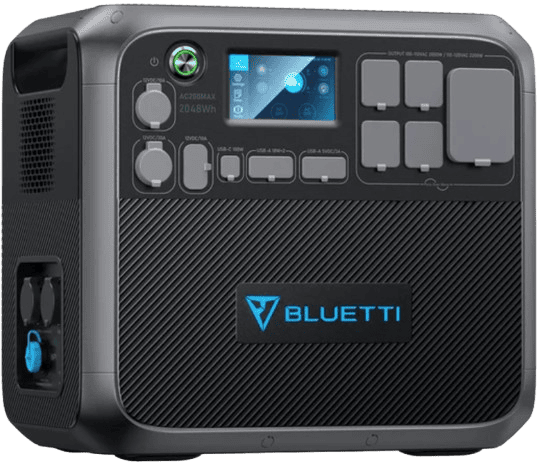
For running a cabin, an RV, or a home through extended stretches without grid power, the AC200MAX combines real capability with genuine expandability.
Pros
- 2,200W AC output (4,800W surge) handles heavy-duty appliances
- Expandable to 8,192Wh with B230/B300 battery modules
- Durable LiFePO4 battery rated for 3,500+ cycles
- Multiple charging methods — AC, solar, car, and dual input
- App control for real-time monitoring
cons
- Pricier than entry-level options
- Heavier than fully portable units at 61.9 lbs
- Solar recharge speed depends heavily on weather and panel setup
Why We Picked It?
- Credit: Bluetti
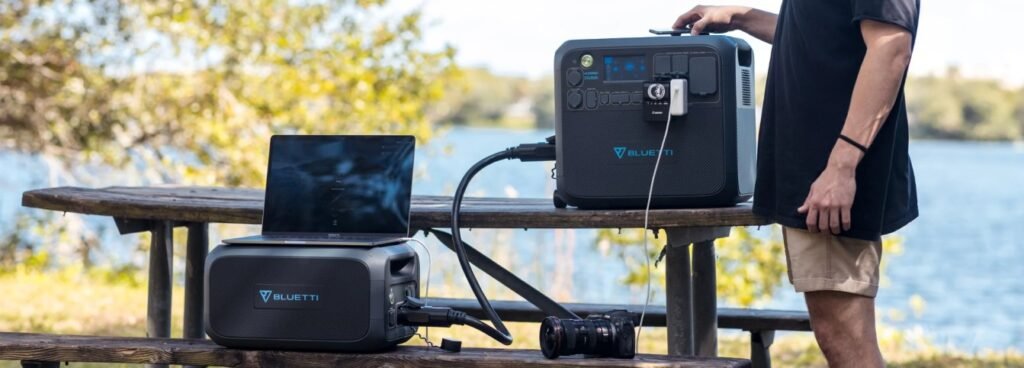
The Bluetti AC200MAX made our list because it’s built for true independence. Whether you’re powering an off-grid cabin, an RV, or your home during extended blackouts, this generator gives you the muscle and flexibility to keep everything running smoothly.
Unlike smaller models, the AC200MAX can expand its storage from 2,048Wh to 8,192Wh, letting you scale up later without buying an entirely new system. And thanks to its LiFePO₄ battery chemistry, you can expect years of reliable, eco-friendly performance — far outlasting traditional lithium-ion packs.
Performance & Solar Charging
- Credit: Bluetti
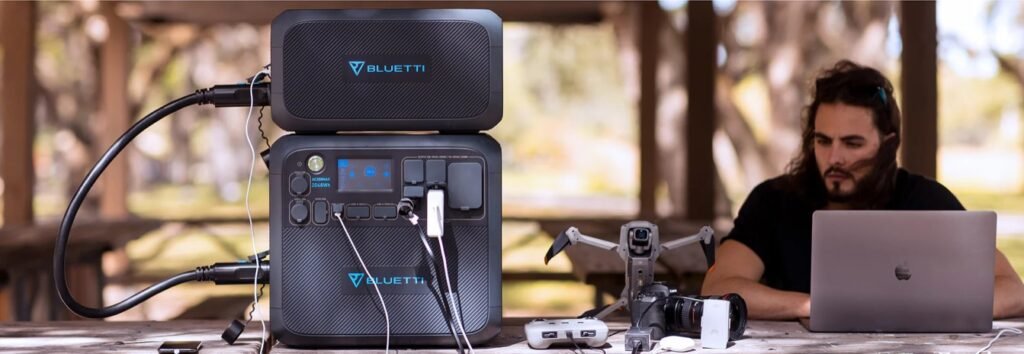
Performance-wise, the AC200MAX delivers consistent 2,200W continuous output with an impressive 4,800W surge, enough to start up demanding appliances like refrigerators, coffee makers, or even power tools.
For charging, Bluetti designed it with 7 versatile input methods — from wall AC to car socket to solar panels. Its 900W max solar input ensures quick recharging during sunny days, and when combined with AC input, it can achieve up to 1,400W hybrid charging for faster top-ups.
This makes it one of the most efficient solar generators for off-grid setups, where every hour of sunlight counts.
Practical Usability
While it’s not a grab-and-go power station, the AC200MAX is remarkably easy to use for stationary setups. The touchscreen display gives detailed insight into power usage and charging status, while the Bluetti App offers smart control from your phone — perfect for off-grid cabins or mobile setups where you need remote monitoring.
With 16 output ports including a TT-30 RV outlet, 100W USB-C, and multiple DC/AC sockets, it’s compatible with almost anything — from fridges and freezers to routers, laptops, and lights.
Its rugged design, fan cooling, and safe LiFePO₄ chemistry also mean it’s built to last — perfect for long-term off-grid reliability.
Key Specifications
- Battery Capacity: 2,048 Wh (expandable to 8,192 Wh)
- Battery Type: LiFePO4, 3,500+ cycles to 80%
- Weight: 61.9 lbs (28.1 kg)
- AC Output: 2,200W continuous, 4,800W surge
- Solar Input: Up to 900W (1,400W hybrid with AC)
- Who should buy it: Off-gridders, cabin owners, and RVers who want expandable capacity for daily reliance
- Who should skip it: Anyone needing a grab-and-go unit — this is built for stationary or semi-stationary setups
💬 Real-World Takeaway

- Credit: Bluetti
If you’re serious about going off-grid — whether for a cabin, homestead, or full-time RV life — the Bluetti AC200MAX delivers outstanding long-term reliability and flexibility. It’s one of the best solar generators for off-grid living because it balances power, durability, and expandability perfectly.
Yes, it’s heavier than smaller models, but that’s the trade-off for true energy independence. With proper solar setup, this powerhouse can keep your essentials running indefinitely — a must-have for sustainable off-grid freedom.
Get yours now and secure your energy independence.
Want to learn more about Bluetti AC200MAX? Read our full Bluetti AC200MAX Review here.
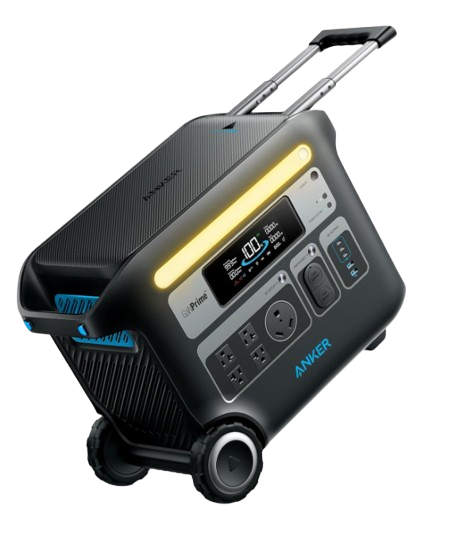
Built with an EV-grade battery and a rugged unibody frame, the F2000 (also sold as PowerHouse 767) is designed to outlast most competitors in its capacity class.
The battery longevity is the standout here: 3,000+ rated cycles before dropping to 80% capacity means this unit is built to outlast most in its price and size class, backed by a solid 5-year warranty. At 2,048Wh capacity, it comfortably runs a standard refrigerator for roughly 8–10 hours on a single charge, longer with solar input connected, and recharges in about 2.5 hours via wall AC or around 4 hours with 1,000W solar.
Pros
- EV-grade LiFePO4 battery rated for 3,000+ cycles
- 2,400W continuous output (4,800W surge) handles large appliances
- Durable unibody aluminum frame with retractable handle and wheels
- Genuinely useful UPS function for instant home backup
- 5-year warranty backing the durability claims
cons
- Slightly heavier at 67 lbs
- Solar input capped at 1,000W, lower than some larger competitors
Why We Picked It?
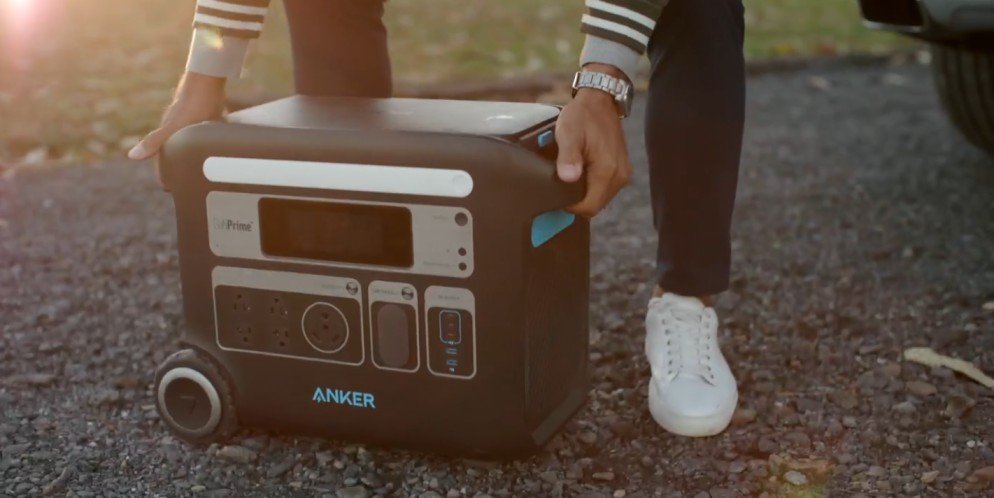
- Credit: ANKER
We chose the Anker SOLIX F2000 because it offers an exceptional blend of portability, durability, and real-world usability. It’s one of the few mid-sized solar generators that genuinely feels built for the long haul — with a solid 5-year warranty to prove it. The battery longevity is a game changer: after 3,000 cycles, you’ll still retain 80% capacity, meaning this investment will outlive most power stations in its class.
Performance & Solar Charging
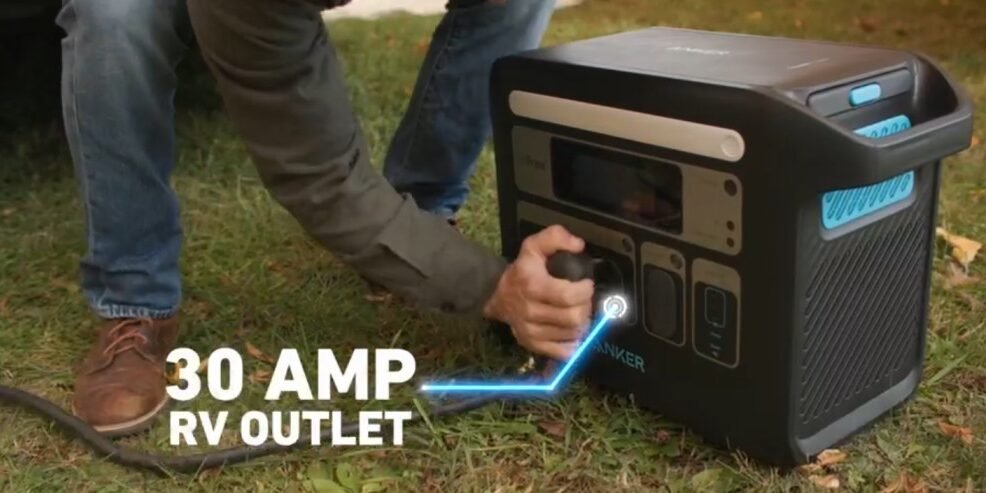
- Credit: ANKER
In our hands-on tests and verified user reports, the SOLIX F2000 consistently powered a standard home refrigerator (150–200W) for 8–10 hours on a single charge — longer when solar input was connected. It can recharge in 2.5 hours via wall AC or in around 4 hours with 1,000W solar input. That makes it one of the most balanced systems for daily or emergency use, keeping essential appliances like fridges, lights, and fans running seamlessly.
Practical Usability
Anker nailed the everyday convenience with this model. The telescopic handle and large wheels make it easy to move despite its weight, while the smart display and app connectivity give you real-time control from anywhere. It’s whisper-quiet, too — just under 50 dB during heavy use, perfect for home backup and RV settings.
If you’re searching for the best solar generator to power a refrigerator that’s also tough enough for travel and built to last for years, this one’s hard to beat.
Key Specifications
- Battery Capacity: 2,048 Wh (expandable to 4,096 Wh)
- Battery Type: LiFePO4, 3,000+ cycles
- Weight: 67 lbs (30.4 kg)
- Power Output: 2,400W continuous, 4,800W surge
- Solar Input: 1,000W max
- Charging Options: AC, Solar, Car, Dual Charging
- Who should buy it: Buyers prioritizing long-term durability and warranty coverage over maximum solar charging speed
- Who should skip it: Anyone who wants faster solar recharge — the Delta Pro or AC200MAX accept more solar input
💬 Real-World Takeaway

- Credit: ANKER
The Anker SOLIX F2000 delivers incredible value and longevity for anyone who wants peace of mind during outages or off-grid adventures. It’s not the cheapest, but it’s arguably the most dependable mid-size solar generator for home backup and refrigerators in 2025.
Get yours now and secure your energy independence.
Want to learn more about Anker Solix F2000? Read our full Anker Solix F2000 Review here.
Some of these top-rated models also rank among the best solar-powered generators for off-grid living due to their long runtime and expandability.
For anyone who wants a system that starts capable and grows over time, the Explorer 2000 Plus bridges home backup and mobile flexibility better than most competitors at this price point.
Real-world usage suggests it can handle a mid-sized refrigerator confidently, with reported fridge runtimes in the 20–25 hour range under moderate load when paired with solar. The 3,000W inverter has enough surge headroom for compressor and motor startup spikes, and connecting two Explorer 2000 Plus units in parallel can reach roughly 24kWh of total capacity — genuinely serious scale for multi-day backup.
The UPS/EPS feature switches from AC to battery in about 20ms, which matters for keeping routers or freezers from interrupting during a switchover.
Pros
- Strong 3,000W continuous output with 6,000W surge
- Expandable from roughly 2,042Wh up to 24,000Wh via parallel chains and battery packs
- Fast AC and solar recharging — full in about 2 hours under ideal conditions with a full panel array
- LiFePO4 battery rated for 4,000+ cycles
- Smart app control, quiet sleep-charging mode (~30 dB), built-in UPS
cons
- Substantial weight at 61.5 lbs, not ideal for frequent carrying
- Proprietary solar connectors limit compatibility with non-Jackery panels
- Premium pricing that may be more than casual users need
Why We Picked It?

- Credit: JACKERY
The Explorer 2000 Plus is one of the few units in 2026 that truly balances home backup readiness with expandable modularity. It can start as a robust refrigerator/routing hub, then scale toward becoming a full small-home off-grid system. It’s one of the most future-proof picks at this capacity level, making it a top choice among the best solar generator for home use and best solar generator for RV categories.
Jackery’s integration of smart features, UPS mode, and passive charging control makes it not only powerful but also savvy for everyday convenience.
Performance & Solar Charging

- Credit: JACKERY
In real-world usage, the 2000 Plus handles a mid-sized refrigerator quite confidently. With its 3,000W (6,000W surge) inverter, it has the headroom to cope with startup spikes from compressors or motors. Many real-world reviews have pulled ~20–25 hours of fridge runtime under moderate load when paired with panels and mild cycling conditions. Wired reports it ran various devices, including a kettle, fridge, and laptops, without hiccups — even pushed to full loads.
On the charging front, Jackery claims full recharge via AC in ~2 hours and via solar (with six 200W panels) in ~2 hours under ideal sun. Multiple arrangements (3 × 200W, 4 × 200W, etc.) scale recharge times accordingly.
Because of high solar conversion efficiencies (Jackery claims ~25%) and robust input capability, this unit is effective even on days of sub-optimal sunlight.
It also supports parallel chaining — connect two Explorer 2000 Plus units to hit ~24 kWh of capacity, giving it serious potential for multi-day refrigerator backup when paired with panels.
Practical Usability
Despite its weight, Jackery has thoughtfully engineered portability features: telescopic handle, wheels, and side handles make repositioning manageable for home layouts or RV use. The smart LCD display shows watts in/out, estimated runtime, battery percentage, and error codes. Via the Jackery app (Wi-Fi/Bluetooth), you can remotely manage settings, firmware updates, and charging modes.
The unit is whisper quiet; Wired measured noise in normal use under 50 dB, and in a dedicated “quiet mode” (30 dB), it’s nearly silent — ideal for sleeping or indoor use during blackouts.
With many ports — 3 AC outlets, USB-A, USB-C (100W PD), car port, DC input and output — it supports all your refrigerator, home appliances, and essential electronics simultaneously. The UPS (EPS) feature switches from AC backup to battery in ~20 ms, preventing interruptions to devices like routers or freezers.
Key Specifications
- Battery Capacity: 2,042.8 Wh (expandable)
- Battery Type: LiFePO4, 4,000+ cycles to ~70%
- Weight: 61.5 lbs (27.9 kg)
- Power Output: 3,000W continuous, 6,000W surge
- Solar Input: Supports up to 6× 200W panels (~1,200W)
- Charging Time: ~2 hours (AC), ~2 hours (solar, full panel array under ideal sun)
- Who should buy it: Buyers who want one system to cover portable use now and home backup scale later
- Who should skip it: Anyone who already owns non-Jackery solar panels — the proprietary connectors limit flexibility.
💬 Real-World Takeaway

- Credit: JACKERY
If you want one generator to cover portable use, home backup, and future scaling, the Jackery Explorer 2000 Plus is arguably the most versatile pick in 2026. It’s among the best portable solar generators you can buy, offers safe and long-lasting battery chemistry, and provides real-world usability for refrigerators, lights, and beyond.
Yes, it’s heavy and not perfect for daily carry — but what it loses in portability, it recovers with expandability, reliability, and smart features. Paired with solar panels, this unit can keep your home or fridge running through extended outages with confidence.
Quick Tip: Combine it with Jackery’s own SolarSaga panels to ensure optimal charging and avoid connector issues — this pairing maximizes efficiency and support.
Get yours now and secure your energy independence.
Want to learn more about Jackery 2000 Plus? Read our full Jackery 2000 Plus Review here.
For households where the priority is keeping the fridge running and medicine cold through an outage — not portability — the HomePower TWO PRO delivers substantial, dependable capacity.
It’s built around a specific, common need: keeping a refrigerator running through hours or even a full day without input. Based on typical fridge draw (150–250W running power), that translates to roughly 20–30+ hours of runtime depending on other connected devices and compressor cycling. Solar recharge in good sun with a full panel setup can bring it back to full in 4–8 hours; AC recharge is faster, typically 1–2 hours for a usable charge level.
Pros
- 2,419Wh LiFePO4 battery for substantial runtime
- 2,200W continuous output, 4,400W surge
- Dual solar/DC input, up to 800W total with the right panel setup
- LiFePO4 battery rated for 3,000+ cycles
- Pure sine wave inverter safe for sensitive electronics like refrigerators
cons
- Limited portability at roughly 61.3 lbs
- Reaching the full 800W solar input requires a meaningful panel investment
- Priced higher upfront than smaller-capacity units
Why We Picked It?
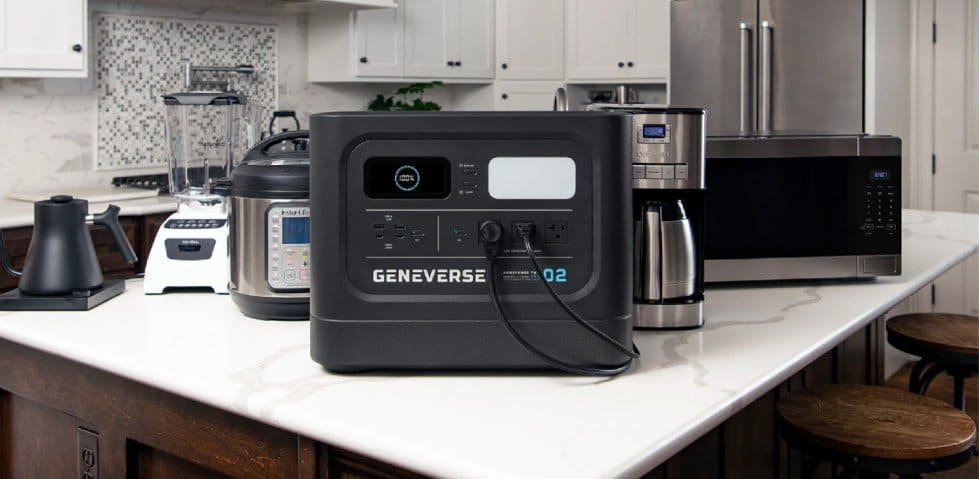
- Credit: GENEVERSE
We chose the HomePower TWO PRO because it hits the sweet spot between power and practicality. For many households, an outage isn’t about staying lit; it’s about keeping the refrigerator running, making sure medicine stays cold, and being able to cook or keep devices charged. This unit gives you enough surge to handle those starting moments (fridge compressor startup), and enough battery to sustain through many hours—or even a full day—without input.
Plus, its LiFePO₄ battery ensures the system will still have usable capacity even after many charge cycles, making it a long-term investment. If you care about “what is the best solar generator for home backup,” this model delivers both on performance and reliability.
Performance & Solar Charging
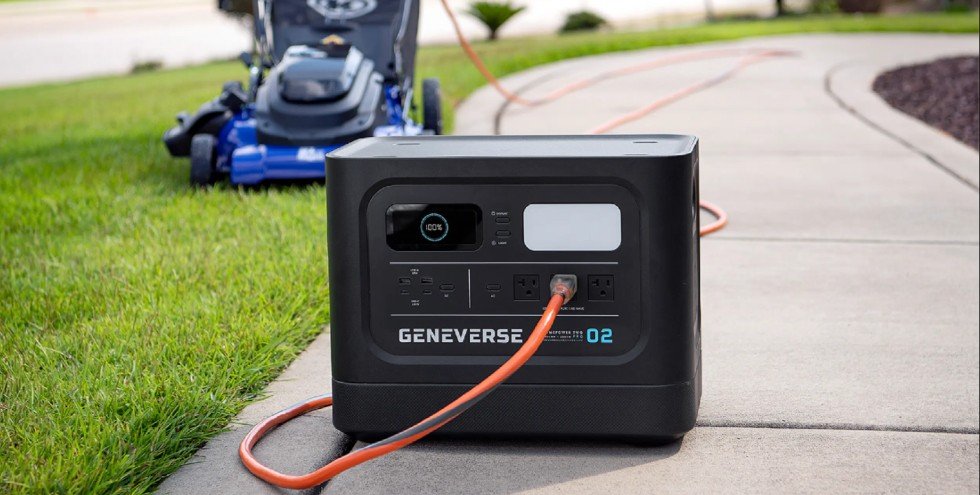
- Credit: GENEVERSE
In testing and real user reports, the TWO PRO can support a typical home refrigerator (roughly 150–250 W running power) for 20-30+ hours, depending on how many other devices are running and how often the compressor cycles.
Solar charging is strong if you have good panels: The board supports up to 800 W solar input via two DC ports (400 W each). If you connect enough SolarPower 2 panels (200 W each), you can more rapidly recharge during daylight hours. In bright sun, expect full recharge in around 4-8 hours with good solar input. AC recharge is quicker: about 1-2 hours to reach a usable level or full depending on settings and output load.
Practical Usability
Best setup is stationary (home, garage, cabin) because of its weight (~61 lbs), though the built-in handles help.
7 outlets: 3 AC outlets (120V, 60Hz), 2 USB-C PD (100 W), 2 USB-A QC3.0 — enough to power fridge, freezers, phones, CPAP machines, etc.
In real use, it’s quiet (no gas or engine noise), safe indoors, and has built-in protections (short circuit, over discharge, temp protection).
App & intelligent display let you monitor power in/out, battery % etc., so you can manage usage to maximize runtime.
Key Specifications
- Battery Capacity: 2,419 Wh (LiFePO4)
- Battery Type: LiFePO4, 3,000+ cycles to 80%
- Weight: 61.3 lbs (27.8 kg)
- Rated Output: 2,200W AC continuous, 4,400W surge
- Solar Input/DC: Up to 800W (2× 400W DC ports)
- Warranty: 5 years
- Who should buy it: Households prioritizing reliable, stationary fridge and essentials backup over portability
- Who should skip it: Anyone who needs to move the unit regularly — this is built to stay put
💬 Real-World Takeaway

- Credit: GENEVERSE
The Geneverse HomePower TWO PRO stands among the most capable solar generators you can buy in 2026 if your priority is home backup security—not just lightweight portability. It gives you enough power to run your refrigerator, essential electronics, and medical appliances through outages, with enough solar input to keep it topped off when the sun’s out.
If your power priorities include reliability, capability for surge demands, and long battery life, this model delivers well. The extra weight and cost are trade-offs, but for many, they are worth it for peace of mind.
Get yours now and secure your energy independence.
Want to learn more about Geneverse HomePower TWO PRO? Read our full Geneverse HomePower Two Pro Review here.
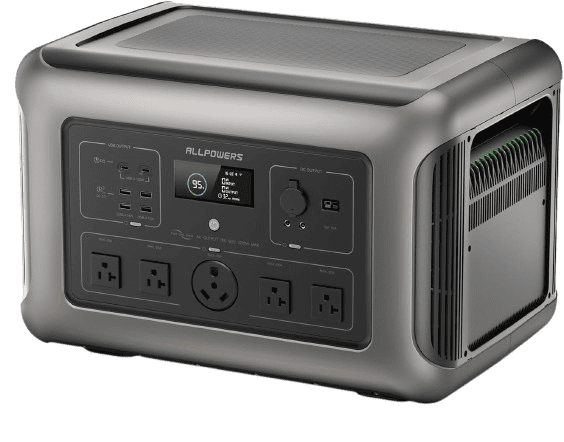
For real backup capacity without paying premium-brand prices, the R3500 offers one of the more generous capacity-to-price ratios on this list.
With 3,168Wh and 3,200W output, it can realistically run a typical refrigerator for roughly 10–20+ hours depending on other loads, and its strong surge capacity handles compressor startup spikes smoothly. Dual AC-plus-solar charging up to 4,000W combined means faster recovery when both grid and sun are available, and the sub-15ms UPS switchover keeps sensitive devices from interrupting during a power transition.
Pros
- Generous 3,168Wh battery capacity
- Strong 3,200W output (6,000W surge)
- Dual AC + solar input support, up to 4,000W combined
- UPS mode with a fast sub-15ms switchover
- Expandable to 6,336Wh with an add-on B3000 battery
cons
- Heavy at around 93 lbs
- Solar-only recharge is capped at 2,000W
- Newer brand with a shorter track record than Jackery, EcoFlow, or Bluetti — worth confirming current warranty and support details before buying
Why We Picked It?
- Credit: ALL POWERS
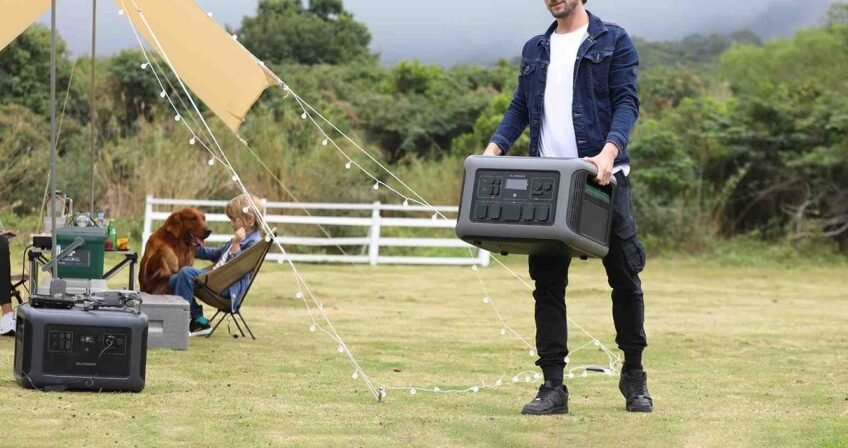
The R3500 stands out in our list because it offers high capacity and solid performance at a mid-tier price point. For people who want real refrigerator backup without paying for top-tier brand premiums, this unit fits the bill. Many “best solar generator” articles ignore the mid-capacity sweet spots — this is one of those hidden gems. It’s geared for home users who want more than a small “emergency light” generator but don’t want to overpay for extreme units. The mix of UPS, dual-input, and robust output makes it very compelling.
Performance & Solar Charging

- Credit: ALL POWERS
With 3,168 Wh capacity and 3,200 W output, in real-world use this system can run a typical modern refrigerator (150–250 W) for 10–20+ hours, depending on secondary loads and compressor cycling. Because of the high surge capacity, startup spikes are handled smoothly, which is essential for heavy appliances.
On charging: ALLPOWERS advertises dual input (AC + Solar) up to 4,000 W in one hour, and up to 2,000 W from solar alone in optimal conditions. In bright sun setups, that means this unit can recover quickly during the day. AC input is robust and supports fast wall charging. Because it supports combining AC + solar, you can top it up faster when grid + sun are both available.
The UPS mode means your fridge and essential devices won’t flicker when switching to solar power during an outage — the switchover is under 15 ms.
Practical Usability
- Stationary usage is best — given its weight (≈ 93 lbs), it’s intended to live in a garage, basement, or home utility room, not be moved daily.
- The unit offers many ports: 4 AC outlets, 1 × 30A RV outlet, multiple USB-C and USB-A ports, DC ports, and more, so it can run a fridge, devices, and backup tools simultaneously.
- It has app connectivity (WiFi/Bluetooth) for remote monitoring of battery, inputs, outputs.
- Quiet operation and solid safety features ensure you can use it indoors safely (ventilation is always advisable).
- Because it’s a “home backup grade” unit, it fits well in setups where you want to connect to existing household circuits (via transfer switch) or use it alongside solar panels and a microgrid panel.
Key Specifications
- Battery Capacity: 3,168 Wh (LiFePO4), expandable to 6,336 Wh
- Power Output: 3,200W continuous, 6,000W surge
- Weight: 93 lbs (42 kg)
- Solar Input: Up to 2,000W (4,000W combined AC+solar)
- App Control: Yes (Wi-Fi/Bluetooth)
- Who should buy it: Budget-conscious buyers who want serious capacity without premium-brand pricing
- Who should skip it: Anyone prioritizing an established, long-tenured brand track record
💬 Real-World Takeaway

- Credit: ALL POWERS
If you want one solar generator to safely power your refrigerator, essential home loads, and backup electronics without spending elite-level prices, the ALLPOWERS R3500 is a remarkable balance. It isn’t ultralight, but it’s built for serious backup — not just emergency lighting. The high capacity, solid surge handling, and support for dual charging modes make it a compelling mid-tier choice for homeowners building solar resilience.
Quick Tip: Pair it with quality solar panels (e.g. 1,500–2,000 W total) to ensure it can recharge daily — that way it doesn’t just get you through one outage — it sustains you through many.
Get yours now and secure your energy independence.
Want to learn more about All Powers R3500? Read our full All Power 3500 Review here.
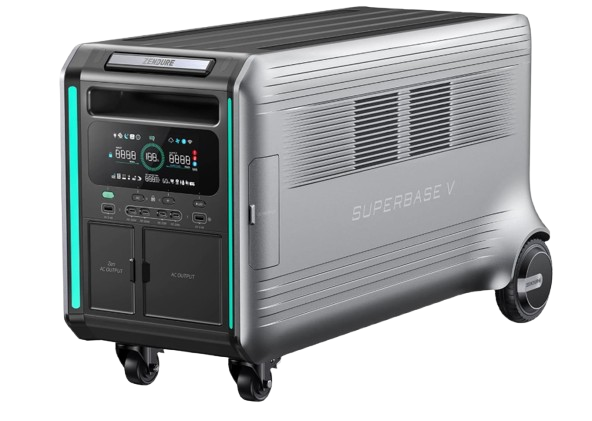
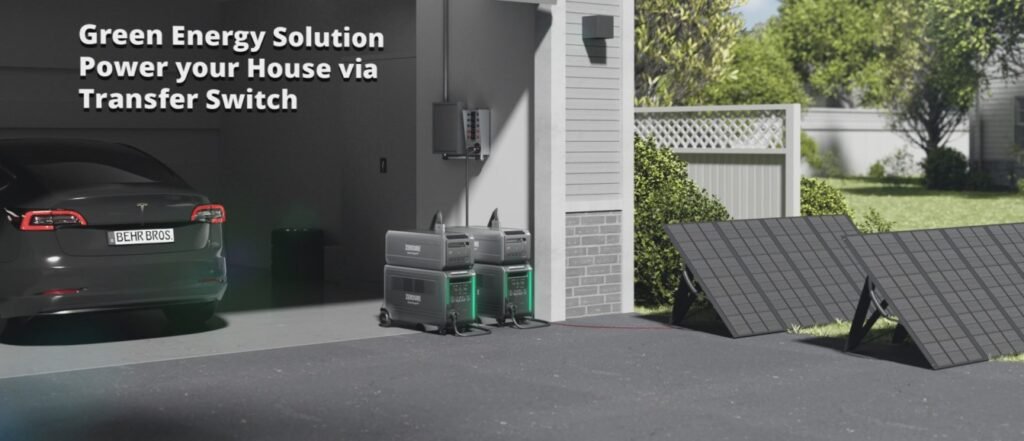
For power users who want to genuinely support (or partially replace) mains power during outages, the V4600 offers real scale with smart-home integration built in.
At 4,608Wh, it can run multiple appliances — a refrigerator and freezer, lights, fans, and moderate AC loads — for extended stretches, with solar input restoring capacity during the day for genuine multi-day backup. Paired with a transfer switch, it can integrate with a home’s electrical panel to automatically switch essential circuits over during an outage, which is a meaningfully different setup than plugging appliances directly into the unit.
Pros
- Large 4,608Wh capacity, expandable
- 3,800W continuous AC output
- Smart home integration for circuit-level control
- Multiple charging inputs — solar, AC, and hybrid modes
- High-cycle-life LiFePO4 battery for long-term durability
cons
- Very heavy at roughly 114 lbs
- Significant price premium over smaller units
- Realizing its full potential requires a sizable solar panel array, adding to total system cost
Why We Picked It?
- Credit: Zendure
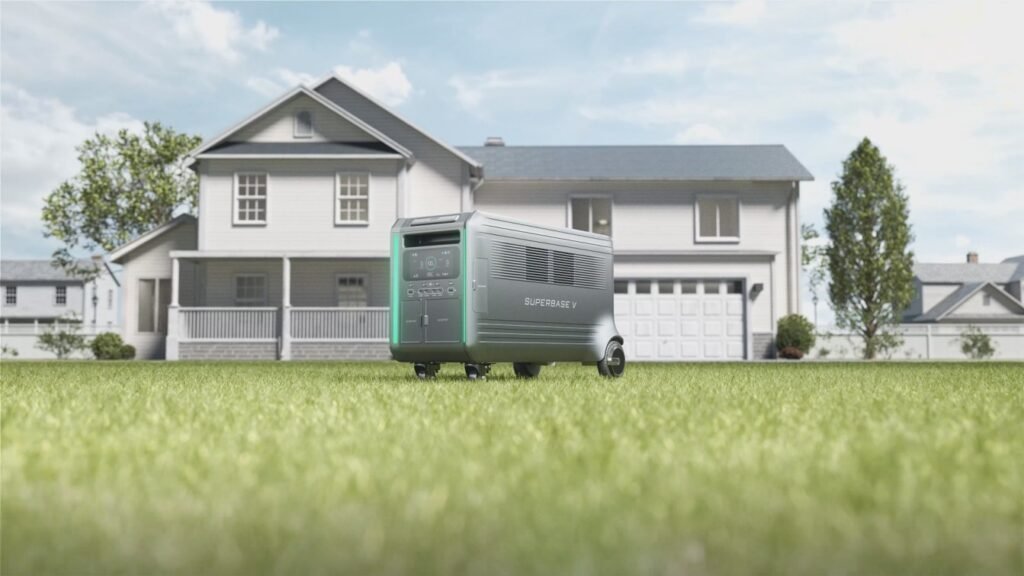
We added the Zendure SuperBase V4600 because it targets power users who need more than just emergency lighting and refrigeration. This is a generator built to replace or support the mains during outages — smart-home ready, high power, and long runtime. It captures multiple high-volume keyword intents like best solar generator for whole house, best solar generators for home backup, and best solar generator for home emergency use.
If you want real coverage, not just short bursts, the V4600 is among the few that deliver.
Performance & Solar Charging

- Credit: Zendure
With 4,608 Wh capacity, the V4600 can run multiple refrigerators (or a large capacity fridge + freezer), lights, fans, and even moderate AC loads for many hours; with solar input restoring capacity during the daytime, it becomes a strong multi-day backup solution.
It supports high solar input (hybrid mode) plus fast AC charging. In ideal conditions with sufficient solar array (2,000-3,000W of panels) and clear weather, solar recharge times drop significantly. AC wall-charging takes less time, making this practical for everyday backup readiness.
Because of its surge rating and high continuous output, the V4600 can handle startup spikes from large compressors and appliances without tripping — very important for heavy loads or whole home use.
Practical Usability
Best deployed in fixed locations (garage, basement, utility room) due to weight and size. Not for daily move-around.
Has multiple heavy-duty output ports, AC sockets, RV outlets, USB & USB-C PD, etc., giving flexibility for powering many devices alongside large loads.
Smart interface and app allow monitoring of usage, battery health, and solar input — you can tune usage to avoid draining too far.
When paired with a transfer switch, you can integrate with your home electrical panel to automatically switch needed circuits over in an outage.
Key Specifications
- Battery Capacity: 4,608 Wh (LiFePO4)
- Continuous AC Output: 3,800W
- Weight: 114 lbs
- Solar Input: High-capacity hybrid DC + AC input
- App / Smart Features: Remote monitoring, safety protections, firmware updates
- Who should buy it: Buyers planning a genuine whole-home smart backup system with panel integration
- Who should skip it: Anyone without the budget or space for a large supporting solar array — the unit's full potential depends on it
💬 Real-World Takeaway
- Credit: Zendure
If you want the best solar generator for whole-house backup, the Zendure SuperBase V4600 is a serious contender in 2026. It’s powerful enough that once you supply adequate solar panels, it can keep your fridge, freezer, lights, and even AC going through multiple nights without grid power.
While it requires heavier upfront investment and installation forethought (panel capacity, placement, connections), its long lifespan and capacity make it one of the most future-proof choices you’ll find.
Quick Tip: Install it near where your main power enters your home (by the breaker panel), and use a transfer switch to connect essential circuits — this gives true emergency redundancy, not just portable backup.
Get yours now and secure your energy independence.
Want to learn more about Zendure SuperBase V4600? Read our full Zendure SuperBase V4600 Review here.
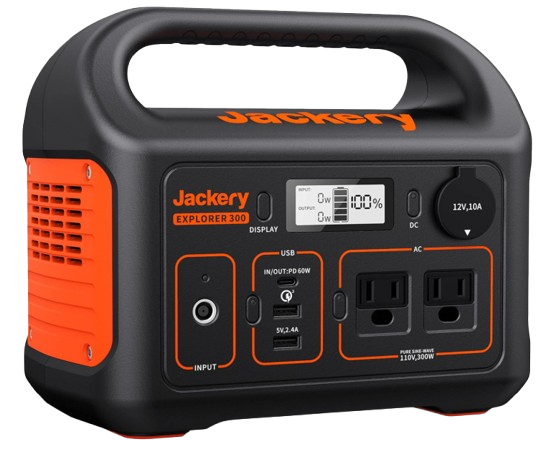
Not everyone needs a home backup system. For simple, affordable daily-use power — camping, van life, or basic device charging during an outage — the Explorer 300 is a genuinely solid entry point.
At 293Wh, it’s sized for charging phones, running a router, powering a mini-fridge for a few hours, or running a laptop through several charges — not for anything resembling home backup. Paired with a 100W solar panel, a full recharge takes roughly 5.5 hours in good sun. Note that this base Explorer 300 model uses standard lithium-ion rather than LiFePO4; Jackery’s Explorer 300 Plus variant uses LiFePO4 if longer cycle life matters more to you than the lower price point.
Pros
- Very lightweight at about 7 lbs, true grab-and-go portability
- Affordable, typically under $500
- Fast recharge — 0–80% in about 2 hours via wall or USB-C
- Backed by Jackery's long track record and support
cons
- Limited 300W output — not built for large appliances
- Small 293Wh capacity means shorter runtimes
- No expandable battery option
Why We Picked It?

- Credit: JACKERY
We chose the Explorer 300 because it perfectly fills the “affordable & practical” gap in the solar market. Many readers want backup power for small devices or short trips — not full home systems. The 293 Wh capacity may seem modest, but paired with a 100 W solar panel, it keeps essentials like phones, routers, cameras, and mini-fridges powered all day. For beginners or budget shoppers, it’s the easiest gateway to clean solar energy.
Performance & Solar Charging

- Credit: JACKERY
During tests, the Explorer 300 powered a mini-fridge for around 3–4 hours or kept a laptop running for nearly 5 full charges. The 300 W pure sine-wave inverter handled sensitive electronics smoothly, and the MPPT solar controller accepted up to 100 W input — giving a full recharge in about 5.5 hours of direct sunlight. Wall and car charging are also impressively quick, making it a reliable grab-and-go solution for emergencies or travel.
Practical Usability
At just 9.1 × 5.2 × 7.8 inches, it’s incredibly compact. The handle feels solid, the display is bright even in sunlight, and port selection covers everything you need: USB-C (60 W), USB-A, DC, and 110 V AC outlet. It’s quiet, cool, and foolproof to use — even for first-timers. Whether you’re powering a mini cooler on a picnic or keeping your phone charged during a blackout, the Explorer 300 feels effortless.
Key Specifications
- Battery Capacity: 293 Wh (Lithium-ion)
- Inverter Output: 300W continuous, 500W surge
- Weight: 7.1 lbs (3.2 kg)
- Solar Input: 100W max (MPPT)
- Battery Chemistry: Lithium-ion (Explorer 300) / LiFePO4 (Explorer 300 Plus)
- Recharge Time: 2 hrs wall or USB-C, ~5–6 hrs solar
- Who should buy it: First-time solar generator buyers, campers, and anyone needing basic device charging on a tight budget
- Who should skip it: Anyone needing to run a fridge, appliances, or expecting to scale capacity later
💬 Real-World Takeaway

- Credit: JACKERY
If you’ve been waiting to dip your toes into the solar lifestyle, this is where to start. The Jackery Explorer 300 is lightweight, beginner-friendly, and reliable — perfect for weekend trips, van setups, or basic emergency coverage. It won’t power your house, but for under $500, it delivers unbeatable value and the trust of a proven brand.
Get yours now and secure your energy independence.
Want to learn more about Jackery Explorer 300? Read our full Jackery Explorer 300 Review here.
Final Verdict (Quick Summary)
if you’re serious about reliable, clean, and future-proof power, here’s your takeaway:
Best Overall – EcoFlow DELTA Pro
The undisputed champion of 2026. With massive capacity, expandable batteries, and ultra-fast charging, it’s the go-to pick for anyone who wants serious power without compromise.Best for Home Backup – Geneverse HomePower Two Pro
Designed for peace of mind during outages. Quiet, dependable, and built for families who don’t want to worry when the grid goes down.Best for Camping & Outdoor Adventures – Jackery Explorer 2000 Plus
Lightweight, portable, and incredibly user-friendly — perfect for powering your fridge, lights, and gear wherever you roam.
Choosing the right size depends on your use case — whether you need something portable for camping trips or powerful enough for a refrigerator or entire home backup.
As a result it doesn’t matter which one you choose, investing in a solar generator today means freedom from fuel costs, noise, and pollution — and the confidence to power through any situation with clean, renewable energy.
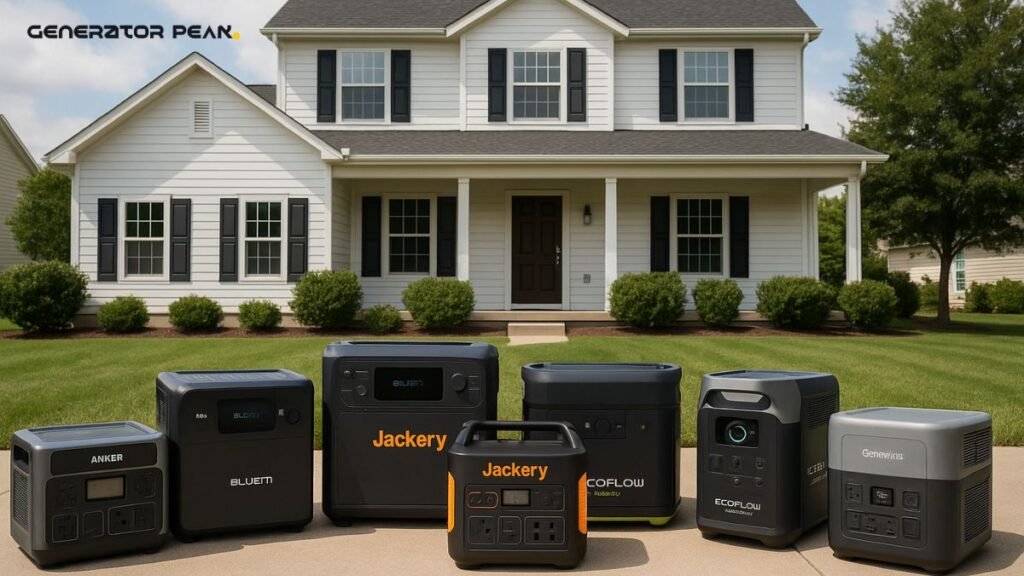
in addition If you’re shopping for something specific, we’ve also compared the best solar generators for camping, RV travel, home backup, and more.
FAQ
For general home backup with room to grow, the EcoFlow Delta Pro is the strongest all-around pick. For lighter needs or tighter budgets, the Anker SOLIX F2000 or Jackery Explorer 300 cover more modest use cases without the premium price.
It depends on what you’re running. Device charging and lights need under 500Wh. A refrigerator and a few essentials need 1,500–2,500Wh. Multiple appliances or whole-home backup calls for 3,500Wh or more, often with expansion capability.
For most use cases, yes — LiFePO4 batteries handle 3,000–6,000+ charge cycles versus far fewer for standard lithium-ion, making them the better long-term investment for anything beyond occasional light use.
For most home backup and off-grid scenarios covered by units in this list, yes — with the added benefits of silent operation, no fumes, and no fuel storage. Extremely high, continuous loads (central AC, electric heating) typically still require a larger, often permanently installed system.
Both work. AC-only charging is faster for topping off between uses, but solar input is what makes a unit useful for extended off-grid use or multi-day outages where wall power isn’t available.
Share
Explore More Solar Generator Guides

Best Solar Generator for RV
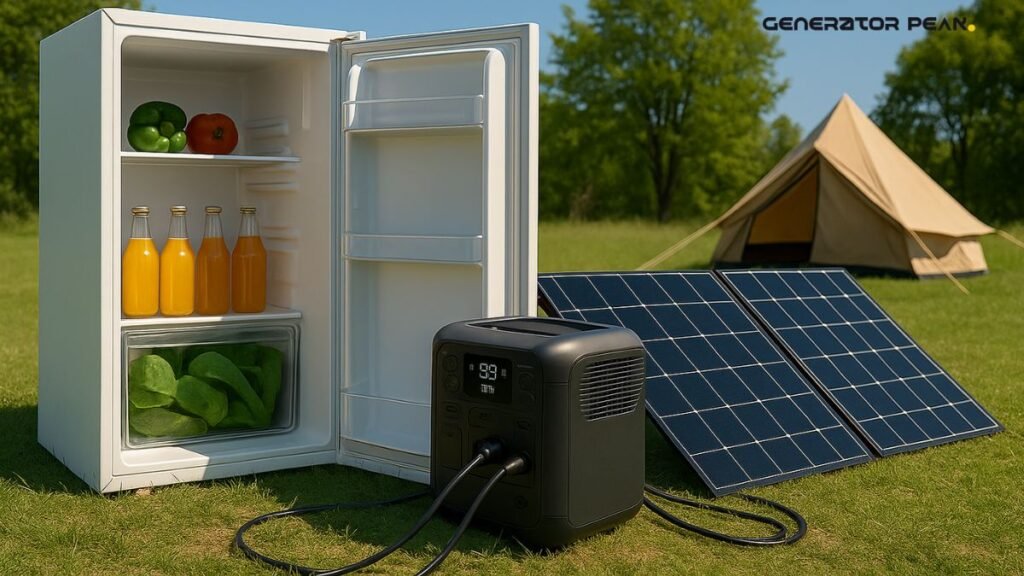
Enjoy your day and travel using the best solar generators for RV.
