Skip to content
Home » Best Picks » 7 Best Solar Generators for Off-Grid Living in 2026
Update Aug 20, 2026
7 Best Solar Generators for Off-Grid Living in 2026
Off-Grid Life Runs on Power You Can Actually Trust
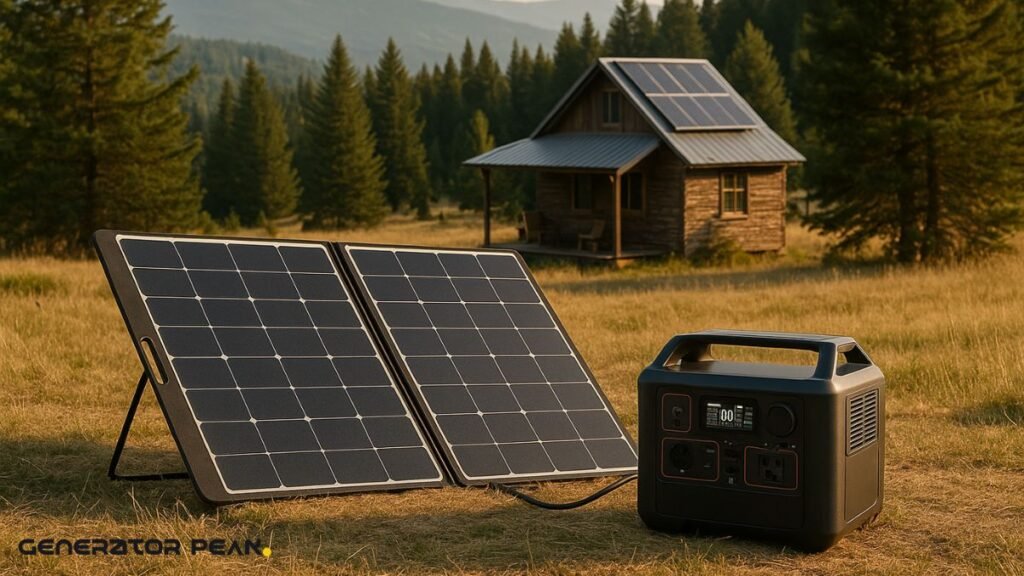
It’s 3 AM, the wind is howling, and the cabin is dark. You reach for a flashlight and it flickers. The fridge is off. Your phone’s at 9%. This is the moment that separates a well-planned off-grid setup from an underpowered one.
Off-grid living isn’t a weekend camping trip — it’s 24/7 reliance on whatever system you’ve built. That changes what “good enough” means. A solar generator that’s fine for a few days of car camping can fall apart under the daily demands of running a cabin, a homestead, or a full-time remote lifestyle.
Not every unit with a solar port is actually built for that. Some have plenty of capacity but can’t handle a fridge’s startup surge. Others are expandable on paper but expensive to scale in practice. We compared battery capacity, continuous and surge output, expandability, and daily-cycling durability across the current lineup to find seven that hold up to real off-grid demands — not just a weekend’s worth of use.
Quick Answer
- Best for Whole-Home Off-Grid Power: EcoFlow Delta Pro
- Best for Mobile Off-Grid Living (RVs, Vans, Tiny Homes): Jackery Explorer 3000 Pro
- Best Value for High-Power Needs: Bluetti AC200P / AC200L
- Best for Long-Term Home Backup: Bluetti EP500Pro
- Best Compact Option: Anker SOLIX C1000
- Best Newcomer Worth Watching: OUPES Mega 3
- Best Ultralight Pick for Minimalist Setups: Renogy Phoenix 300
Comparison Table: Top 7 best solar generator for off-grid living
Image | Generator Name | Power Output | Battery Capacity | Rating | Price |
 | 3600W+ surge | 3600Wh | 4.4/5 | ||
 | 3,000W | 3,024Wh | 4.5/5 | ||
 | 2,400W | 2,048Wh | 4.2/5 | ||
 | 3000W | 5120Wh | 5/5 | ||
 | 1800W | 1024Wh | 4.5/5 | ||
 | 3600W–5000W | 3072Wh–5040Wh | 4.3/5 | ||
 | 1000W | 1000Wh | 3.8/5 |
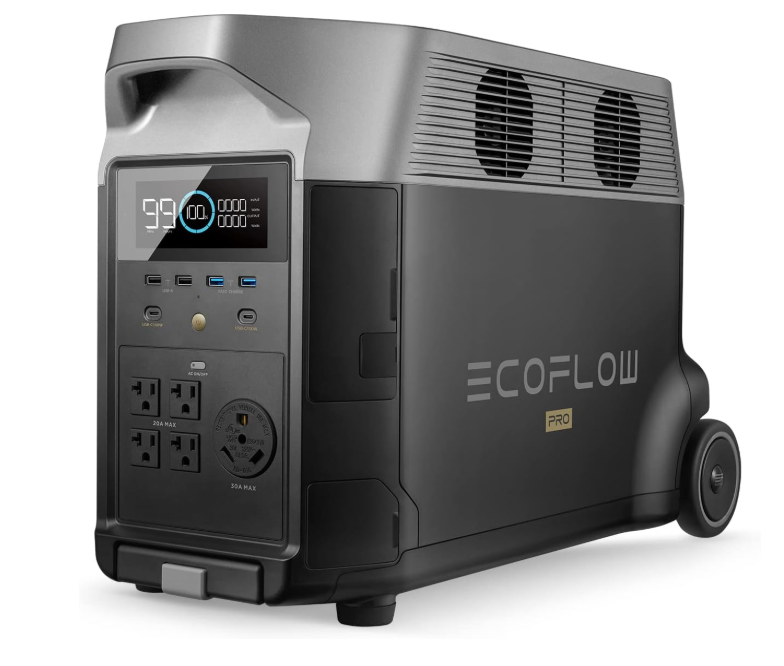
For powering an entire off-grid home rather than just a few essentials, the Delta Pro is built at a genuinely different scale — a modular energy ecosystem rather than a single fixed-capacity box.
Pros
- Massive 3,600Wh capacity, expandable up to 25kWh
- 3,600W continuous output (7,200W surge) runs power tools, AC units, and a fridge simultaneously
- Charges via solar, EV station, wall outlet, or gas add-on
- Smart app control plus full UPS backup mode
- Modular — supports extra batteries and smart panels
cons
- Heavy at 99 lbs — plan for wheels or a dolly if it needs to move
- Premium price point
- Optional accessories (solar panels, smart panel) sold separately, adding to total cost
The expandable ecosystem is what separates this from most competitors: connect extra batteries, the EcoFlow Smart Home Panel, or even a dual-fuel generator for true redundancy. For anyone off-grid by choice rather than emergency, that scalability matters — your power needs in year one rarely match year three.
Key Specifications
- Battery Capacity: 3,600 Wh (expandable to 25,000 Wh)
- Output Power: 3,600W continuous, 7,200W surge
- Battery Chemistry: LiFePO4, 3,500+ cycles to 80%
- Weight: 99 lbs (45 kg)
- Charging Options: Solar (1,600W max), EV station, AC, car
- Warranty: 5 years
- Who should buy it: Off-grid homeowners or homesteaders who want to scale capacity over time and run serious appliance loads
- Who should skip it: Anyone on a tight budget or with modest power needs — the Anker SOLIX C1000 or Bluetti AC200P cover lighter use cases for less
Get yours now on Amazon and Enjoy massive capacity, ultra-fast solar charging, and true whole-home power backup all with zero noise or fumes
Want to learn more about EcoFlow Delta Pro? Read our full EcoFlow Delta Pro Review here.
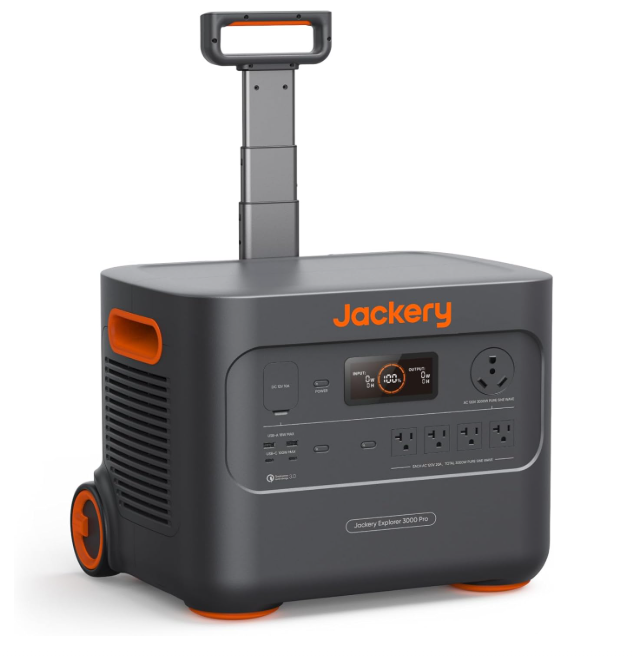
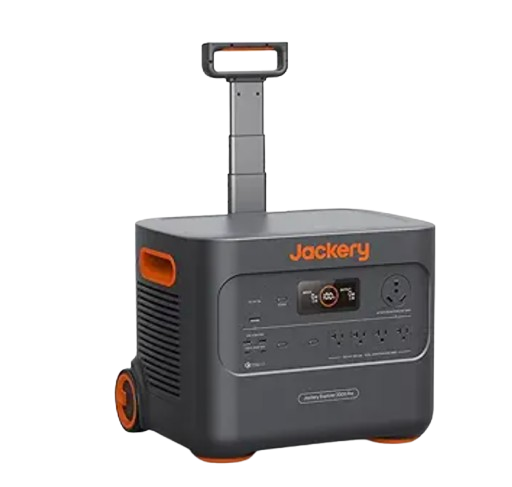
For off-grid living that doesn’t stay in one place — full-time RVers, van-lifers, tiny house dwellers — the Explorer 3000 Pro balances real capacity against genuine portability.
Pros
- 3,024Wh battery with 3,000W output and strong surge support
- Fast recharge — full via AC or solar in about 2.4 hours under good conditions
- Compact and wheeled for easy transport
- Silent operation, well suited to stealth camping or close-quarters RV parking
- Supports up to 6 solar panels for up to 1,400W of solar input
cons
- Fixed battery — no modular expansion path
- Less sophisticated app functionality than EcoFlow's ecosystem
- Premium pricing for a non-expandable unit
The recharge speed is the real advantage for daily off-grid cycling: roughly 2.4 hours to full via wall power, or 3–4 hours with a properly sized solar panel setup — fast enough that most sunny days can fully replenish what you used overnight. Battery shelf life is also notably strong, retaining charge well even after months of non-use, which matters if you’re away from your setup for extended stretches.
Key Specifications
- Battery Capacity: 3,024 Wh
- Output Power: 3,000W continuous, 6,000W surge
- Battery Chemistry: LiFePO4
- Weight: 63.9 lbs (29 kg)
- Charging Options: Solar (1,400W max), AC, car
- Warranty: 3 years
- Who should buy it: RVers, van-lifers, and tiny-home dwellers who need real capacity without sacrificing mobility
- Who should skip it: Anyone planning to scale capacity later — this unit doesn't expand
Get yours now on Amazon and combine big power with surprising portability and fast charging.
Want to learn more about Jackery 3000 Pro? Read our full Jackery 3000 Pro Review here.
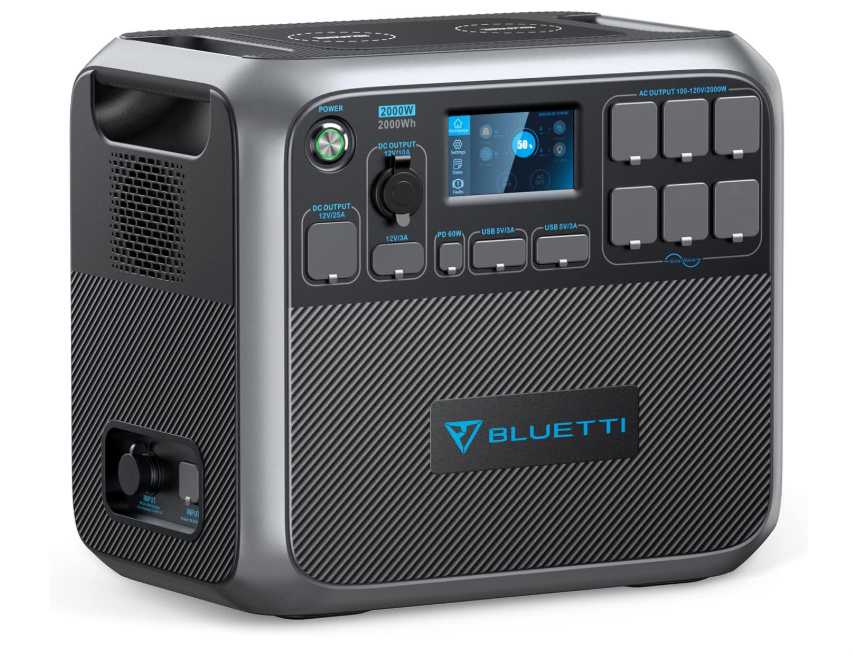
If you want serious off-grid capability without the premium-brand price tag, the AC200P (or its newer AC200L variant) remains a strong workhorse in 2026.
Pros
- 2,000W output (4,800W surge) with 2,048Wh capacity
- Durable LiFePO4 battery rated for 3,500+ cycles
- Extensive port selection — 6 AC outlets, USB-A/C, 12V RV port, wireless charging
- Solar input up to 1,200W, fast for this price tier
- Strong value relative to capacity and build quality
cons
- Heavier than some competitors at 60.6 lbs
- No wheels included
- Fan noise becomes noticeable under heavy load
- Fan is a little loud under heavy load
At 3,500+ rated cycles, this is a battery built for genuinely regular use — roughly a decade of daily cycling before meaningful capacity loss. The port selection is a real strength for off-grid setups specifically, since it can run multiple devices and small appliances simultaneously without needing extra adapters. Bluetti’s newer AC200L variant improves solar input efficiency if you’re choosing between the two, but the original AC200P still holds up well for the price.
Key Specifications
- Battery Capacity: 2,048 Wh (LiFePO4)
- Output Power: 2,000W continuous, 4,800W surge
- Battery Chemistry: LiFePO4, 3,500+ cycles
- Weight: 60.6 lbs (27.5 kg)
- Charging Options: Solar (up to 1,200W), AC, car
- Warranty: 2–4 years, varies by seller
- Who should buy it: Off-gridders who want strong capability at a lower price than premium brands
- Who should skip it: Anyone who needs wheels for regular relocation, or plans to expand capacity later
Get yours now on Amazon ideal for off-grid setups without breaking the bank.
Want to learn more about Bluetti AC200P? Read our full Bluetti AC200P Review here.
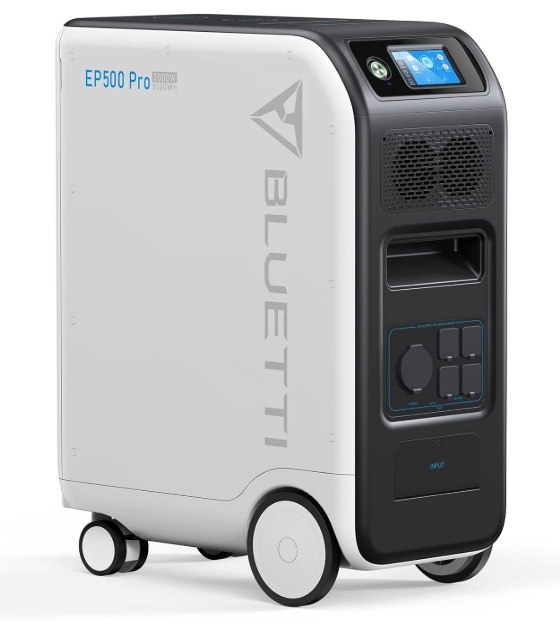
For a stationary off-grid home, cabin, or workshop, the EP500Pro is built to stay in place and genuinely cover a household’s daily power needs — the largest single-unit capacity on this list.
Pros
- Massive 5,100Wh capacity, ideal for whole-house-adjacent backup
- 3,000W pure sine wave output (6,000W surge)
- LiFePO4 battery rated for 6,000+ cycles
- Dual solar and AC charging for faster refills
- UPS mode switches instantly during blackouts
- Smart touchscreen and remote app control
cons
- Heavy at 182 lbs — this is genuinely stationary, not something you relocate often
- High upfront cost
- Expanding beyond a single unit requires a second EP500Pro plus Bluetti's Fusion Box accessory
At 5,100Wh, this can realistically keep a full-size fridge and freezer, medical devices, lights, and a router running for days without recharging, and dual solar-plus-AC charging brings that back up faster than single-source charging. The 6,000+ cycle rating is genuinely strong — designed for 10-15 years of regular use, which matters a great deal for daily off-grid reliance rather than occasional backup.
It’s worth being precise about expandability here: the EP500Pro isn’t modular with add-on battery packs the way the Delta Pro is, but two units can be linked via Bluetti’s Fusion Box for combined 240V output and more than 10,000Wh of total capacity — a real expansion path, just a different one than “snap in another battery.”
Key Specifications
- Battery Capacity: 5,100 Wh (LiFePO4)
- Output Power: 3,000W continuous, 6,000W surge
- Battery Chemistry: LiFePO4, 6,000+ cycles to 80%
- Weight: 182 lbs (83 kg)
- Charging Options: Dual solar + AC, car input
- UPS Mode: Yes
- Warranty: 5 years
- Who should buy it: Off-grid homesteaders or cabin owners who want maximum single-unit capacity in a stationary setup
- Who should skip it: Anyone needing portability, or a budget that doesn't stretch to premium pricing
Get yours now on Amazon which is Massive, long-lasting power for total off-grid independence no gas, no noise, no stress.
Want to learn more about Bluetti EP500Pro? Read our full Bluetti EP500Pro Review here.
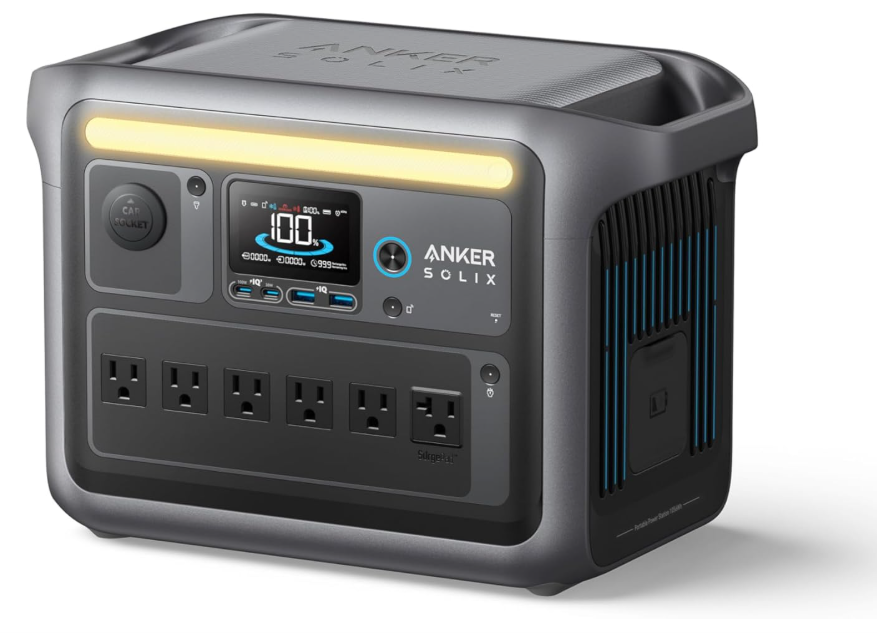
For off-grid living in a tiny home, van, or small cabin, the SOLIX C1000 covers light-to-medium loads without the size or cost of the bigger units above.
Pros
- Lightweight and portable at 28.4 lbs
- 1,800W output — capable of running most small appliances
- Fast charging, 0–100% in about 58 minutes via AC
- Durable LiFePO4 battery rated for 3,000+ cycles
- Quiet operation well suited to indoor or close-quarters off-grid use
cons
- Lower capacity at 1,056Wh — not built for large appliances
- No built-in display, mobile app only
- Not expandable
It’s a genuinely well-matched option for van-lifers, tiny-home dwellers, and remote workers who don’t need industrial-scale power but want dependable daily charging. The HyperFlash recharge speed — under an hour via AC — is a real advantage when daylight or generator-run time is limited and you need a fast top-up before heading out.
Key Specifications
- Battery Capacity: 1,056 Wh (LiFePO4)
- Output Power: 1,800W continuous, 2,400W surge
- Battery Chemistry: LiFePO4, 3,000 cycles to 80%
- Weight: 28.4 lbs (12.9 kg)
- Charging Speed: 0–100% in 58 minutes (AC)
- Solar Input: 600W max
- Warranty: 5 years
- Who should buy it: Tiny home, van, or small cabin dwellers with light-to-moderate daily power needs
- Who should skip it: Anyone planning to run large appliances or expand capacity later
Get yours now on Amazon Perfect for mobile off-grid lifestyles and lightweight power needs.
Want to learn more about Anker Solix C1000? Read our full Anker Solix C1000 Review here.
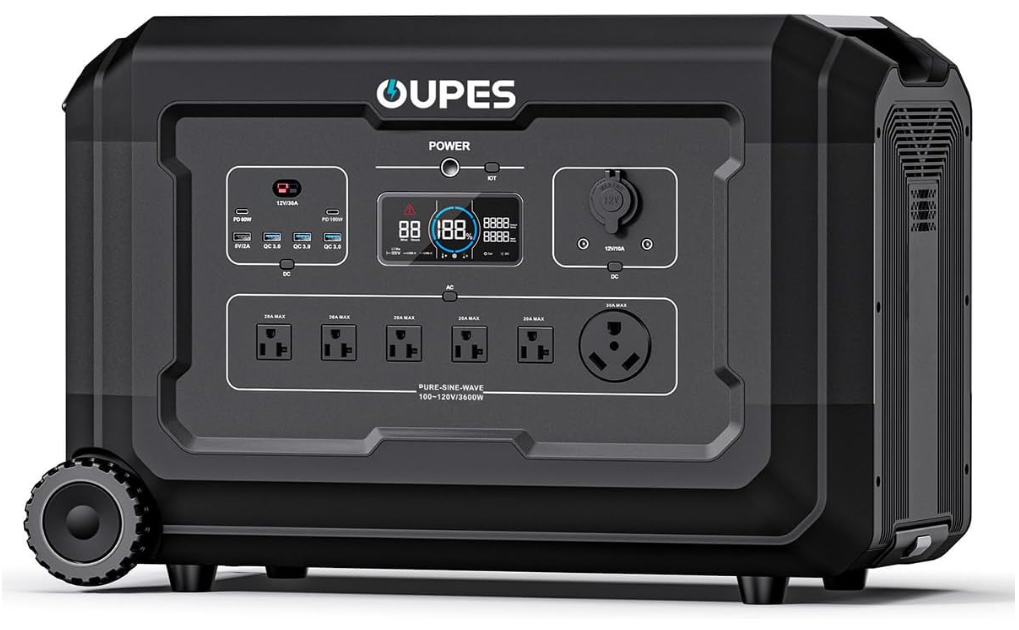
OUPES is a newer name compared to the established brands on this list, but the Mega 3’s specs are genuinely competitive with EcoFlow and Bluetti at a more accessible price point.
Pros
- Large 3,072Wh capacity and 3,600W output
- LiFePO4 battery rated for 6,000+ cycles
- Capable of running most household appliances, including AC units and induction cooktops
- Extensive port selection — AC, USB-A/C, RV port, car outlet
- Rugged, well-ventilated design with touchscreen and app control
cons
- Newer brand with a shorter track record than Jackery, EcoFlow, or Bluetti
- Heavier than average at 93 lbs
- Fewer third-party accessories currently available
The 6,000+ cycle rating and 3,600W output are genuinely strong numbers for the price — competitive with units costing considerably more from more established brands. As with any newer entrant, it’s worth doing your own check on current warranty terms, customer support responsiveness, and long-term parts availability before committing, since that track record simply hasn’t had as much time to build as the bigger names on this list.
Key Specifications
- Battery Capacity: 3,072 Wh (LiFePO4)
- Output Power: 3,600W continuous, 7,200W surge
- Battery Lifespan: 6,000+ cycles to 80%
- Weight: 93 lbs (42 kg)
- Charging Options: Solar (up to 1,800W), AC, car
- Warranty: 5 years
- Who should buy it: Budget-conscious buyers who want premium-tier specs and are comfortable with a newer brand
- Who should skip it: Anyone who prioritizes an established, long-tenured brand and support track record above spec sheet numbers
Get yours now on Amazon, Massive power, ultra-durable battery, and serious off-grid potential a rising star with serious capabilities.
Want to learn more about Oupes Mega 3? Read our full Oupes Mega 3 Review here.
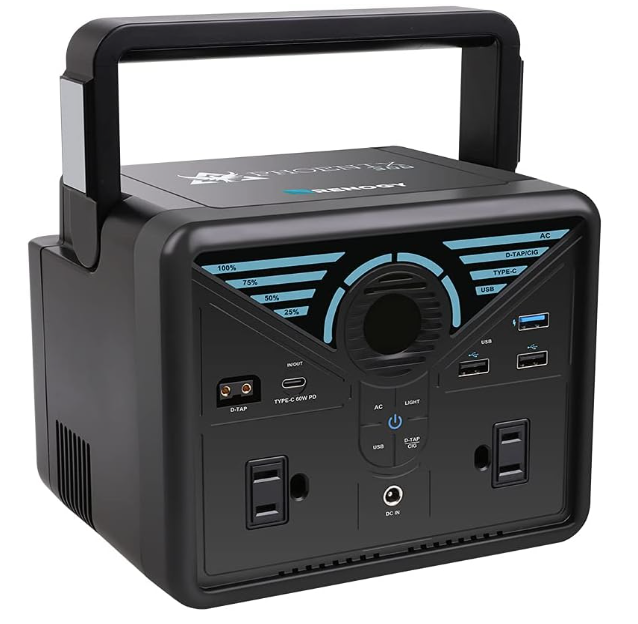
Not every off-grid setup needs serious capacity. For minimalist off-gridders, hikers, or anyone building a lightweight backup kit, the Phoenix 300 covers the essentials in a genuinely pocketable footprint.
Pros
- Extremely lightweight and compact at 6.4 lbs
- Quiet, fanless operation
- Pure sine wave output despite the compact size
- USB-C PD, AC, DC, and car ports included
- Affordable price point
cons
- Small 337Wh capacity — not built for high-wattage appliances
- Uses standard lithium-ion rather than LiFePO4, which typically means a shorter cycle life
- No mobile app or expandability
- Slower solar charging than larger units
This isn’t meant to run a fridge or power tools — it’s built for mobility and simplicity. Realistic expectations: about 20+ phone charges, 4–6 hours of laptop use, a full night of LED lighting, or several hours running a CPAP or router. The fanless design means genuinely silent operation, which is a real plus for quiet camping nights, but the standard lithium-ion battery (rather than LiFePO4) means it won’t hold up to as many charge cycles over time as the other picks on this list.
Key Specifications
- Battery Capacity: 337 Wh (Lithium-ion)
- Output Power: 300W continuous, 600W surge
- Weight: 6.4 lbs (2.9 kg)
- Charging Options: Solar, AC, car
- USB-C PD: Yes, 60W output
- Warranty: 1 year, extendable via Renogy
- Who should buy it: Minimalist off-gridders, hikers, and anyone who needs a lightweight backup for devices, not appliances
- Who should skip it: Anyone needing to run a fridge, tools, or other high-draw equipment — this is device-charging capacity only
Portable, affordable, and whisper-quiet perfect for travel, emergencies, or powering the essentials off-grid.
Want to learn more about Renogy Phoenix 300? Read our full Renogy Phoenix 300 Review here.
FAQ
It depends heavily on your appliance load, but as a general range: light use (lights, device charging, a small fridge) is manageable with 1,000–2,000 Wh systems; running a full-size fridge, some power tools, and multiple devices typically calls for 3,000 Wh or more, ideally expandable.
For essential loads (fridge, lights, device charging, Wi-Fi, some power tools), yes, with the right capacity and consistent solar input. Running heavy continuous loads like central AC or electric heating typically requires a much larger, often permanently installed solar-plus-battery system beyond what portable units on this list are designed for.
This depends on cycle rating. A battery rated for 3,000 cycles and cycled once daily lasts roughly 8 years before capacity drops meaningfully; a 6,000-cycle battery can last well over a decade under the same daily use pattern.
Many off-gridders keep a fuel generator as backup for extended cloudy stretches, even with a strong solar setup. It’s a reasonable redundancy layer rather than a sign the solar system is inadequate.
What’s the difference between LiFePO4 and standard lithium-ion batteries for off-grid use?
“For a complete overview, explore our best solar generators guide.” + “If you plan to use solar power for emergency prep, our home backup generator picks are ideal.”
Share