Skip to content
Home » Best Picks » 7 Best Solar Generators for RV Living in 2026
7 Best Solar Generators for RV Living in 2026
Ditching the Generator Without Losing the Power
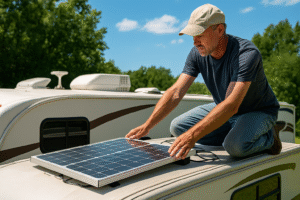
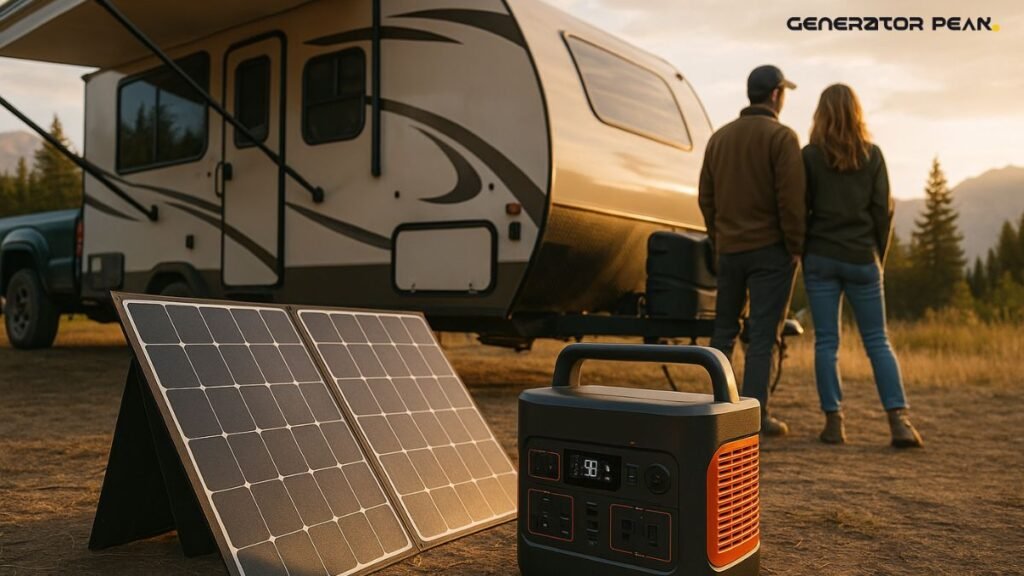
Running a gas generator at a campsite means fumes, noise, fuel runs, and neighbors who can hear you from three sites over. More RV owners are switching to solar generators instead — quiet, clean power that lets you camp anywhere from a national park to a remote boondocking spot without hookups.
The tricky part is that “solar generator for RV” covers a huge range of capability. Some units are fine for charging phones and running lights. Others are built to handle a rooftop AC unit or a full 30-amp RV electrical system. Picking the wrong one means either overpaying for capacity you won’t use, or discovering mid-trip that your generator can’t start your AC’s compressor.
We compared battery capacity, continuous and surge output, solar recharge speed, and how well each unit actually fits into RV life — storage space, weight, vibration durability, and noise — to build this list. Whether you’re a full-time RVer or a weekend traveler, here are the seven worth considering in 2026.
Quick Answer
- Best for Full-Time RVers & 30-Amp Setups: EcoFlow Delta Pro
- Best for RV Air Conditioners at Medium Scale: Bluetti AC200MAX
- Best for Fast Recharge on the Road: Anker SOLIX F2000
- Best All-in-One with Expandability: Jackery Explorer 2000 Plus
- Best for Quiet, Simple Operation: Geneverse HomePower Two Pro
- Best for Large RVs & Multiple AC Units: ALLPOWERS R3500
- Best for Multi-Day Off-Grid Boondocking: Zendure SuperBase V4600
Quick Comparison Table: 7 best rv solar generators in 2025
Image | Generator Name | Power Output | Battery Capacity | Rating | Price |
 | 3,600W (7,200W surge) | 3,600 Wh | 4.4/5 | ||
 | 2,200W | 2,048 Wh | 4.5/5 | ||
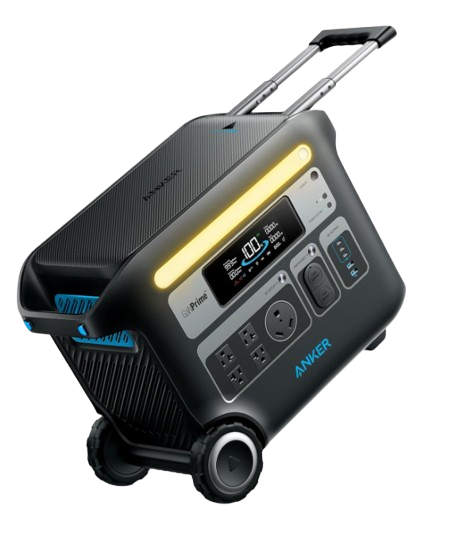 | 2,400W | 1,056 Wh | 4.4/5 | ||
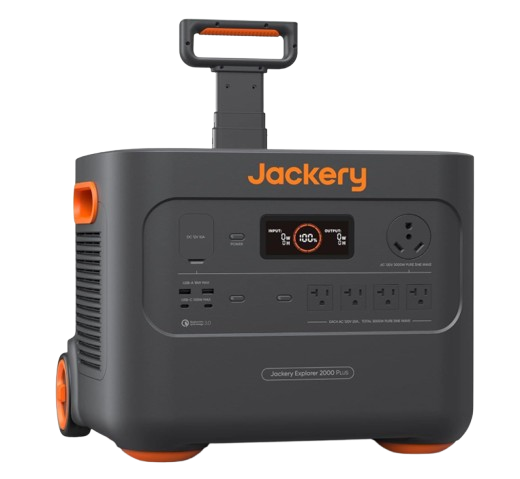 | 3,000W | 2,042 Wh | 4.6/5 | ||
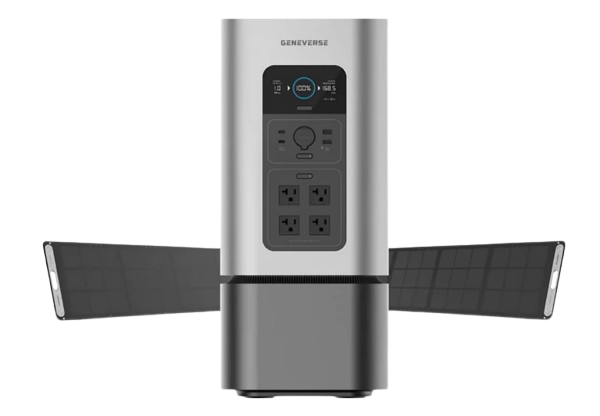 | 2,200W | 2,419 Wh | 4/5 | ||
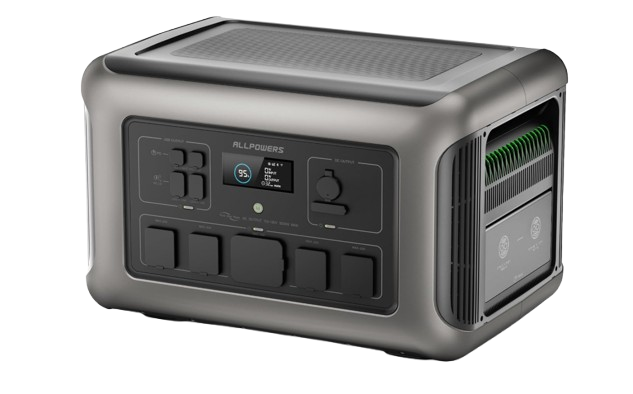 | 3,500W | 3,168 Wh | 3/5 | ||
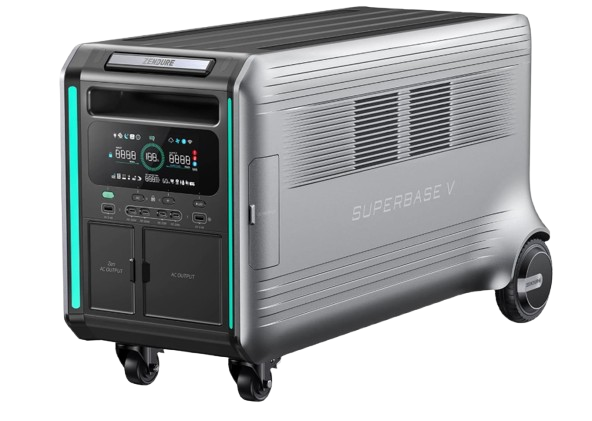 | 3,800W | 4,608 Wh | 2.5/5 |
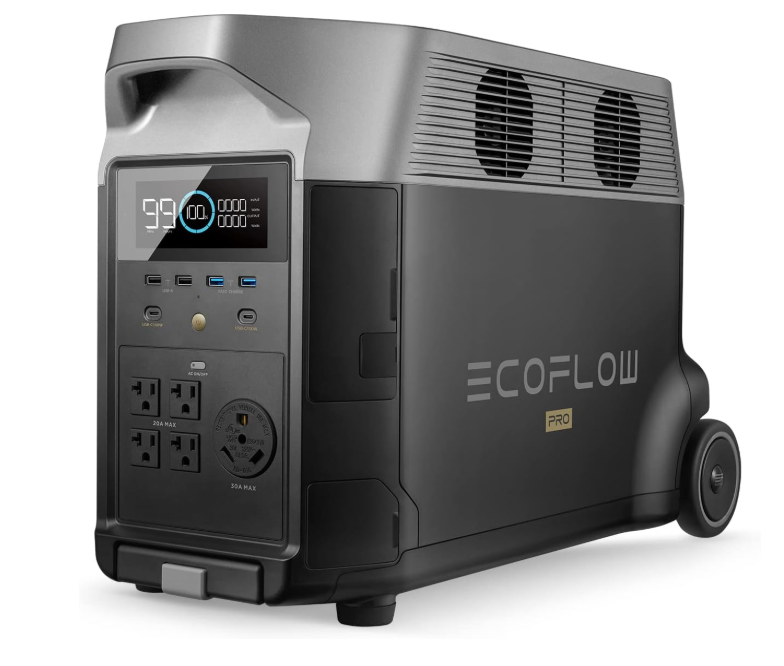
If you’re a full-time RVer or regularly boondock for extended stretches, the Delta Pro is built to genuinely replace a gas generator rather than just supplement one — capable of running an AC unit, microwave, and other high-draw appliances without flinching.
Pros
- Massive 3,600Wh capacity, expandable up to 25kWh
- Handles RV AC units and 30-amp service with ease
- Fast dual charging (AC + solar simultaneously)
- Built-in wheels and handle for loading in and out of a rig
- Smart app for monitoring and control from inside the RV
cons
- Heavier than most on this list at 99 lbs — plan for where it'll live in your storage bay
- Premium price tag
- Genuinely overkill if you're not running AC or high-draw appliances
For 30-amp RV systems specifically, this is the unit that can realistically keep pace: 3,600W continuous output with a 7,200W surge means it won’t choke on an AC compressor’s startup draw the way smaller units might. Charging is fast too — 0–80% in about 2 hours via wall outlet, or combine solar and AC input for quicker turnaround between camp stops.
Key Specifications
- Battery Capacity: 3,600 Wh (expandable to 25,000 Wh)
- Output Power: 3,600W continuous, 7,200W surge
- Battery Type: LiFePO₄, 3,500+ cycles
- Weight: 99 lbs
- Solar Input: Up to 1,600W
- Charging Options: AC, Solar, EV Station, Car
- Who should buy it: Full-time RVers or frequent boondockers running AC, a microwave, or multiple appliances at once
- Who should skip it: Weekend campers who mainly need lights and device charging — this is more capacity and weight than necessary
Get yours now on Amazon and Power your entire RV without noise or fuel hassles
Want to learn more about EcoFlow Delta Pro? Read our full EcoFlow Delta Pro Review here.
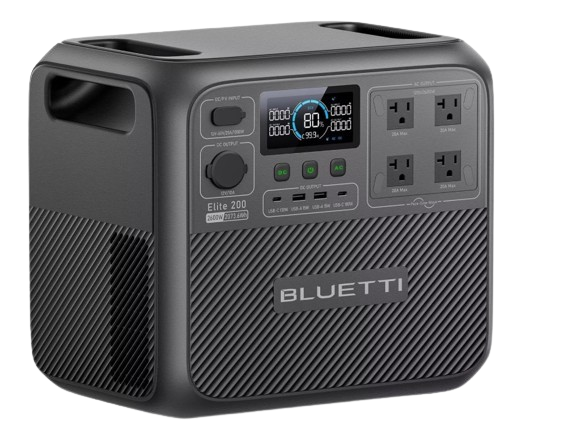
For RVers who want real AC-running capability without going all the way up to the Delta Pro’s size and price, the AC200MAX is the sweet spot — expandable, durable, and well-regarded in the RV community specifically.
Pros
- 2,200W pure sine wave inverter runs most RV appliances, including mini AC units
- Expandable battery system up to 8,192Wh
- Long-lasting LiFePO₄ battery, 3,500+ cycles
- Quiet, clean off-grid power
- Up to 900W solar input for reasonably fast recharging
cons
- On the heavier side at 61.9 lbs for a unit without wheels
- Display is basic compared to newer competitors
- No wheels — awkward for anyone loading it in and out of a storage bay regularly
It’s powerful enough to run an RV mini-split or window AC unit for a few hours on battery alone, and compact enough to actually fit in typical RV storage without dominating the space. If you’re planning long weekends or moderate off-grid stretches rather than full-time living, this is a genuinely well-matched pick rather than overkill.
Key Specifications
- Battery Capacity: 2,048 Wh (expandable up to 8,192 Wh)
- Output Power: 2,200W continuous, 4,800W surge
- Battery Type: LiFePO₄
- Solar Input: Up to 900W (VOC 10–145V)
- Weight: 61.9 lbs
- Who should buy it: RVers who want to run an AC unit occasionally without committing to a full 30-amp-scale system
- Who should skip it: Anyone who needs to move the unit frequently — the lack of wheels is a real inconvenience for that use case
Get yours now on Amazon and Expandable, reliable, and ready for any RV power setup
Want to learn more about Bluetti AC200MAX? Read our full Bluetti AC200MAX Review here.
If you’re moving campsites often and want to top off quickly between stops, the F2000’s charging speed is the standout feature — genuinely useful for RVers who don’t stay parked long enough for slow solar-only recharging.
Pros
- 2,400W continuous output (3,600W surge) handles heavy-duty RV appliancesy-duty devices
- Long-lasting LiFePO₄ battery rated for 3,000+ cycles
- Recharges 0–80% in about 1.4 hours combining solar and AC
- Wheeled, suitcase-style design for easy loading
- Built-in UPS function
cons
- Limited expandability — no external battery support on the base unit
- Priced slightly higher than some competitors in the same capacity class
The fast combined AC-plus-solar recharge means less downtime between drives, which matters more for RVers who are frequently on the move than for those parked at one boondocking site for a week. The wheeled, suitcase-style frame also makes it easier to roll in and out of a rig compared to units without that feature.
Key Specifications
- Battery Capacity: 2,048 Wh (expandable to 4,096 Wh with add-on battery)
- Output Power: 2,400W continuous, 3,600W surge
- Battery Type: LiFePO₄, 3,000+ cycles
- Weight: 67.3 lbs
- Solar Input: 1,000W max
- Charging Time: ~1.4 hrs (solar + AC combined)
- Who should buy it: RVers who move sites often and want fast recharge over maximum base capacity
- Who should skip it: Anyone planning to expand capacity later — the F2000's expansion options are more limited than competitors like the Delta Pro or Explorer 2000 Plus
Get yours now on Amazon and get Fast charging, tough wheels, and RV-ready power wherever you go
Want to learn more about Anker Solix F2000? Read our full Anker Solix F2000 Review here.
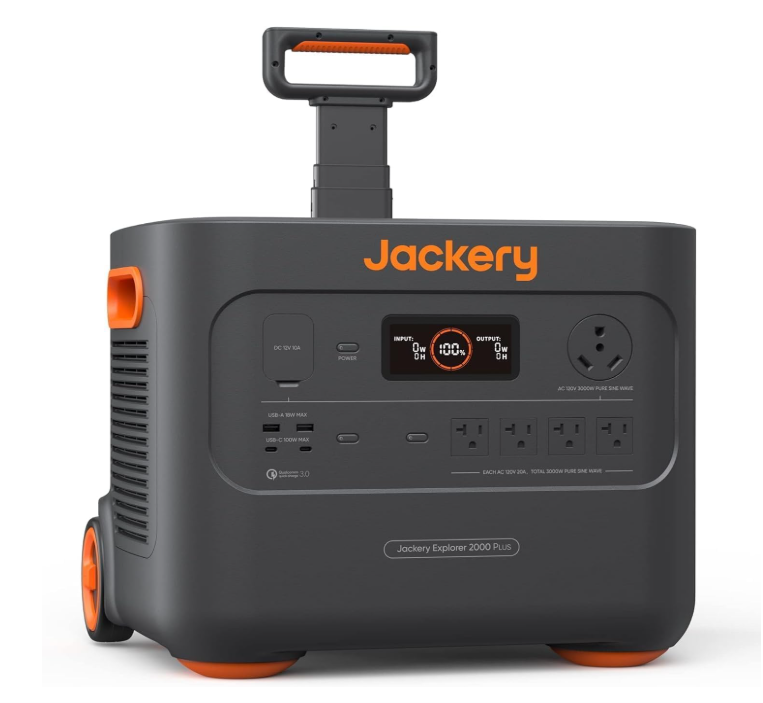
If you want a system that starts manageable and grows with your RV lifestyle — say, moving from weekend trips toward full-time travel — the Explorer 2000 Plus is built for that transition.
Pros
- Expandable up to 12kWh for extended RV stays
- Pure sine wave inverter supports 3,000W output
- Ultra-quiet operation, under 30 dB
- App control and real-time power monitoring
- Solar input up to 1,200W
cons
- Higher upfront price for the base unit alone
- Expansion batteries sold separately
- Slightly bulkier than some competitors, worth measuring your storage space first
Its LiFePO₄ battery is rated for over 4,000 cycles, and the smart expansion system means you’re not locked into base capacity if your travel plans change — a real advantage for anyone unsure whether they’ll be full-timing eventually. Solar charging up to 1,200W is fast enough to top off during a single sunny day at camp.
Key Specifications
- Battery Capacity: 2,042 Wh (expandable to 12,000 Wh)
- Output Power: 3,000W continuous, 6,000W surge
- Battery Type: LiFePO₄, 4,000+ cycles
- Weight: 61.5 lbs
- Solar Input: 1,200W
- Noise Level: ≤30 dB
- Who should buy it: RVers who want room to scale up capacity as their travel style evolves
- Who should skip it: Anyone who wants everything included in one purchase — expansion batteries are bought separately
Get yours now on Amazon and Enjoy Massive expandability and whisper-quiet performance built for RVers
Want to learn more about Jackery Explorer 2000 Plus? Read our full Jackery Explorer 2000 Plus Review here.
For RVers who value simplicity and near-silent operation above all else, the HomePower Two Pro is a strong plug-and-play option — no wiring, no complicated setup, just power when you need it.
Pros
- Safe, durable LiFePO₄ battery rated for 3,000+ cycles
- Quiet, fan-less cooling system — genuinely silent operation
- Built-in wheels and handle for RV transport
- Fast solar and wall charging
- Well suited to sensitive electronics and CPAP machines
cons
- Slightly heavier than similar-capacity competitors
- More limited third-party expansion options than modular systems like the Delta Pro
- Solar panels sold separately
The fanless cooling is the real differentiator here — for RVers parked close to neighbors, a completely silent unit is a genuine quality-of-life upgrade over fan-cooled competitors that get audible under load. It handles small AC units, electric grills, CPAP machines, and refrigerators without issue, and recharges via solar in as little as 3–4 hours with compatible panels.
Key Specifications
- Battery Capacity: 2,419 Wh
- Output Power: 2,200W continuous, 4,400W surge
- Battery Type: LiFePO₄
- Charging Time: 1–2 hrs AC, 3–4 hrs solar
- Weight: 61.3 lbs
- Mobility: Built-in wheels and handle
- Who should buy it: RVers who prioritize quiet operation and simple, no-fuss setup
- Who should skip it: Anyone planning to expand capacity extensively later — options here are more limited than fully modular competitors
Get yours now on Amazon and just plug in and power your home.
Want to learn more about Jackery Geneverse HomePower Two Pro? Read our full Geneverse HomePower Two Pro Review here.
If your rig runs multiple air conditioners, an electric cooktop, or other high-demand equipment simultaneously, the R3500 is sized for that load specifically.
Pros
- Strong 3,500W inverter with 5,000W surge
- Generous 3,168Wh capacity
- Well suited to 30-amp RV hookup replacement
- Fast AC + solar dual recharging
- Bluetooth and app monitoring
cons
- Heavy at just over 99 lbs
- Bulky footprint — measure your storage space before buying
- Fans can get loud under high sustained loads
Unlike more moderate mid-range units, the R3500 is built to run a meaningful share of an RV simultaneously — rooftop AC units, a microwave, and other appliances together without tripping overload protection. Combined solar-and-AC charging gets it back to full in under 2 hours, which matters if you’re trying to minimize downtime between travel days.
As with any less-established brand, it’s worth confirming current warranty terms and long-term parts availability before buying, since support infrastructure tends to be more proven with the larger, longer-tenured brands on this list.
Key Specifications
- Battery Capacity: 3,168 Wh
- Output Power: 3,500W continuous, 5,000W surge
- Battery Type: LiFePO₄, 3,500+ cycles
- Weight: 99.2 lbs
- Charging Time: 1.5 hrs (AC + Solar)
- Solar Input: 1,200W max
- Who should buy it: Large RVs running multiple high-draw appliances at once
- Who should skip it: Smaller rigs or single-AC setups — the Delta Pro or AC200MAX are better matched to more moderate loads
Get yours now on Amazon Unmatched power for Class A RVs, off-grid builds, and 30-amp hookups
Want to learn more about Allpowers R3500? Read our full Allpowers R3500 Review here.
For RVers who genuinely camp off-grid for days at a stretch without hookups, the SuperBase V4600 offers real scale — and, worth being precise about, standard LiFePO4 chemistry rather than the newer semi-solid-state tech Zendure reserves for its larger V6400 sibling.
Pros
- Large 4,608Wh capacity, expandable with satellite batteries
- LiFePO4 battery rated for 6,000+ cycles — among the highest on this list
- 3,800W continuous output (5,000W peak)
- Modular, stackable battery design
- Fast solar input up to 3,000W, among the fastest here
cons
- Among the heaviest and priciest options on this list
- Genuine overkill for weekend campers
- A newer, less established brand than Jackery, EcoFlow, or Bluetti — worth confirming current warranty and support details before buying
A clarification worth making clearly: Zendure’s SuperBase V line comes in two versions. The V4600 reviewed here uses standard LiFePO4 batteries rated for 6,000+ cycles. Its larger sibling, the V6400 (6,438Wh), is the one that uses Zendure’s newer semi-solid-state chemistry — rated for a lower 3,000+ cycles but with higher energy density per pound. If semi-solid-state tech is specifically what draws you to this brand, make sure you’re looking at the V6400, not the V4600.
That said, the V4600 is still a genuinely capable unit for boondocking: 3,800W of continuous output, expandable with satellite batteries, and the fastest solar input on this list at up to 3,000W — useful if you want to fully recharge in a single sunny afternoon rather than over multiple days.
Key Specifications
- Battery Capacity: 4,608 Wh (expandable with satellite batteries)
- Output Power: 3,800W continuous, 5,000W peak
- Battery Type: LiFePO4, 6,000+ cycles
- Solar Input: Up to 3,000W
- Charging Time: 1.5–2 hrs (AC + Solar)
- App Control: Yes (iOS + Android)
- Who should buy it: RVers who boondock for multiple days and want fast solar recharge plus room to expand
- Who should skip it: Weekend or occasional travelers — this is genuinely more capacity and cost than typical short trips need
Get yours on Amazon Best-in-class tech for off-grid freedom that lasts for days
Want to learn more about Zendure SuperBase V4600? Read our full Zendure SuperBase V4600 Review here.
FAQ
Yes, but capacity and surge rating matter a lot. Units in the 3,000W+ continuous output range with strong surge capacity (like the Delta Pro or ALLPOWERS R3500) can generally start and run a typical RV AC unit. Smaller units may struggle with the compressor’s startup surge even if their continuous rating looks sufficient on paper.
This depends heavily on what you’re running. A unit like the AC200MAX or F2000 might power lights, a fridge, and device charging for a day or more, but running AC continuously will draw down even a large battery in a matter of hours. Solar recharging during the day is what makes multi-day boondocking realistic.
Only if you’re trying to fully replace a 30-amp shore power connection, including running AC and multiple appliances simultaneously. If you mainly use hookups when available and want backup for boondocking essentials, a smaller unit is often sufficient and more practical to store.
For essentials (lights, fridge, device charging), yes, with a properly sized solar setup. For running AC regularly, you’ll likely need to supplement solar with your RV’s alternator charging while driving or occasional shore power.
LiFePO4 is the current standard — reliable, long cycle life, well-proven. Semi-solid-state batteries (used in some newer units like Zendure’s SuperBase V6400) offer higher energy density per pound but currently trade off some cycle life in exchange. Neither is universally “better” — it depends on whether weight or long-term cycle life matters more for your use case.
“We’ve also reviewed the best solar generators for camping for outdoor enthusiasts.”
Share