 Skip to content
Renogy Phoenix 300 Review 2026: The Best Ultralight Power Station for Minimalist Off Grid Setups?

- Credit: Renogy
Not everyone shopping for a portable power station needs to run a fridge or a power saw. If you’re a hiker, minimalist camper, or someone who just wants a lightweight backup for phones, laptops, lights, and a CPAP machine, most of the power stations on the market are overbuilt and overpriced for what you actually need.
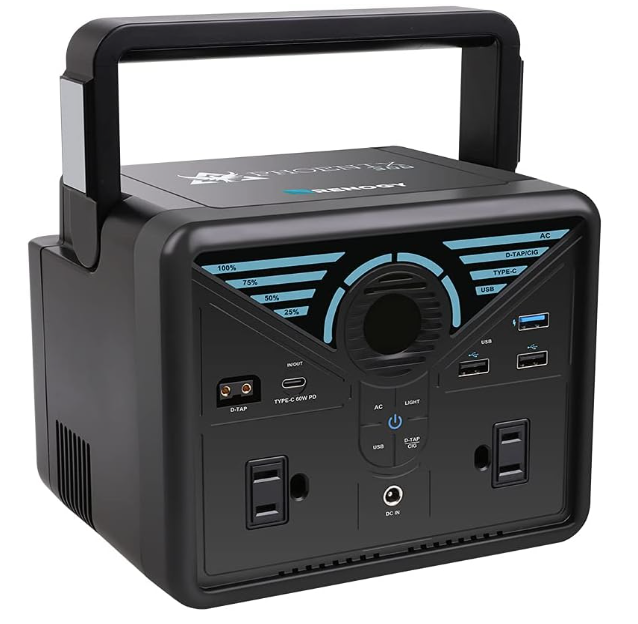
That’s the gap the Renogy Phoenix 300 is built to fill. At just 6.4 lbs, it’s small enough to toss in a daypack, yet it still outputs a genuine pure sine wave something a lot of budget power stations skip in favor of a cheaper, less device-safe modified sine wave inverter.
In this review, we’ll go through the Phoenix 300’s specs, what it can and can’t realistically power, and who it actually makes sense for, so you’re not left disappointed after unboxing it expecting more than a 337Wh unit can deliver.
Pros
- Lightweight at 6.4 lbs
- Quiet, fanless operation
- Pure sine wave output
- USB-C PD (60W), AC, DC, car ports
- Affordable for the build quality
Cons
- Small 337Wh capacity
- Lithium-ion, not LiFePO4 shorter cycle life
- No app or expandability
- Slower solar charging
- AC cuts off below 10% battery
Renogy Phoenix 300 Key Specifications
- Battery Capacity: 337Wh, lithium-ion (18650 cells)
- Cycle Life: Rated for 1,000+ cycles
- Output Power: 300W continuous, 600W surge
- Inverter Type : Pure sine wave
- AC Outlets: 2 × 120V AC outlets (up to 200W combined via pure sine wave inverter)
- USB Ports: 1 × USB-C (60W Power Delivery), USB-A ports (up to 18W Quick Charge)
- Other Ports: D-tap/cigarette lighter port (11–17V, 10A max)
- Total Ports: 8 charging ports across AC, USB-C, USB-A, and D-tap/CIG
- Weight: 6.4 lbs (2.9 kg)
- Dimensions: 7.1 × 6.1 × 5.6 in
- Recharge Options: AC wall outlet, solar panel, car charger
- Extras: Built-in LED flashlights on the handle, battery management system (BMS) for voltage, temperature, and overcurrent protection
- App Control: Not supported
- Warranty: 1 year, extendable through Renogy
The Renogy Phoenix 300 is a compact, lightweight power station built for people who need to keep small devices running, not appliances. With a 337Wh lithium ion battery and 300W continuous output (600W surge), it’s suited to charging phones, tablets, laptops, cameras, and running LED lighting or a CPAP machine for a night. Its pure sine wave inverter is a notable feature at this size and price it means the output is clean and safe for sensitive electronics, unlike cheaper modified sine wave units. The trade-off for its light weight and low price is capacity: this isn’t a unit that’s going to run a fridge, power tools, or anything power-hungry for long. It’s built for mobility and simplicity, not raw output.
Key Highlights of the Renogy Phoenix 300
Genuinely Portable
At 6.4 lbs and roughly the size of a large lunchbox, the Phoenix 300 is one of the few power stations you could realistically carry in a backpack rather than just load into a trunk.
Fanless, Silent Operation
Because it doesn't need active cooling at this power level, the Phoenix 300 runs completely silent a real advantage for anyone camping in quiet settings or using it overnight next to a bed for CPAP power.
Pure Sine Wave Output
Despite its size and price, Renogy didn't cut corners on inverter quality. Pure sine wave output means it's safe to use with laptops, cameras, and medical equipment that can be damaged by dirtier power.
Fast USB C Charging
The 60W USB-C Power Delivery port is fast enough to charge a laptop like a MacBook Air in under two hours, according to Renogy, which is a meaningful convenience for a unit this small.
Eight Total Ports
Two AC outlets, USB-C PD, USB-A Quick Charge, and a D-tap/cigarette lighter port cover a wide mix of devices without needing extra adapters.
Built In Safety Features
A battery management system protects against overvoltage, overcurrent, and temperature issues, and integrated LED flashlights on the handle add a nice practical touch for nighttime use.
Real World Use Cases
Hiking and Backpacking Trips
Its light weight makes the Phoenix 300 one of the few power stations that actually makes sense to carry on foot, for keeping a phone, GPS device, or headlamp charged over a multi days trip.
Minimalist Camping
For campers who just need lighting, phone charging, and maybe a small fan or speaker running, the Phoenix 300 covers the basics without the bulk of a larger unit.
CPAP Backup Power
With pure sine wave output, the Phoenix 300 can safely run a CPAP machine for a night though Renogy recommends using a DC converter and turning off any built-in heater or humidifier to conserve capacity.
Emergency Device Charging Kit
As a grab and go backup for power outages, the Phoenix 300 can keep phones, a router, and basic lighting running for a day or two, which covers most short-term outage scenarios.
Photography and Videography in the Field
The dedicated D tap port is a nice touch for photographers and videographers who need to power camera rigs or monitors on location.
Performance & Charging
- AC Charging: The Phoenix 300 recharges from a standard wall outlet, though Renogy doesn’t publish an official full-recharge time on the spec sheet expect it to be quicker than solar given the small battery size.
- Solar Charging: The Phoenix 300 supports solar input, and Renogy suggests pairing it with a compatible portable panel like the E.FLEX 50 for on the go charging. Given its smaller battery and charging hardware, solar recharge times run slower than what you’d see on larger power stations designed around fast solar input.
- Car Charging: A car charging option is available as well, useful for topping off the battery during a drive to a trailhead or campsite.
- Output Behavior: It’s worth knowing that the AC outlets automatically shut off once the battery drops below 10%, at which point you’ll need to switch to the DC ports to keep drawing power a detail worth planning around if you’re relying on AC powered devices.
- Realistic Runtime Expectations: Based on its 337Wh capacity and 300W output, you can expect roughly 20+ phone charges, 4–6 hours of laptop use, a full night of LED lighting, or several hours of CPAP or router use on a full charge. This is device-charging capacity, not appliance-running capacity.
Is the Renogy Phoenix 300 Worth It?
For the right buyer, yes but “right buyer” is the key phrase here. The Phoenix 300 isn’t trying to compete with 2,000Wh-plus power stations on capacity, and it shouldn’t be judged against them. What it does well is deliver genuine portability, a clean pure sine wave output, and a solid port selection in a package light enough to actually carry.
Where it falls short compared to larger units is battery chemistry and cycle life. Renogy uses standard lithium-ion cells here rather than LiFePO4, which is common in this price and size class but does mean the battery won’t hold up to as many charge cycles over the years as LiFePO4 based competitors. If you’re planning to use this daily for years, that’s worth factoring in. If you’re buying it as an occasional-use backup or a lightweight travel companion, it’s less of a concern.
There’s also no app control and no way to expand capacity this is a simple, self contained unit by design, which keeps the price down but limits it for anyone wanting a growing or monitored power system.
Who Should Buy the Renogy Phoenix 300?
Hikers and Backpackers
If you need lightweight, reliable power for a phone, GPS, or headlamp on multi days trips, this is one of the few power stations light enough to actually carry.
Minimalist Campers
For basic lighting, device charging, and small electronics at a campsite, the Phoenix 300 covers the essentials without unnecessary bulk or cost.
Emergency Kit Builders
As a compact backup for power outages focused on keeping phones and small devices charged, it’s an affordable addition to an emergency supply kit.
CPAP Users Who Travel Light
The pure sine wave output makes it a safe option for a night or two of CPAP backup power while traveling or camping.
Photographers and Content Creators
The D-tap port and fast USB-C charging make it a handy companion for powering camera gear in the field.
Final Verdict: Renogy Phoenix 300 (2026)
The Renogy Phoenix 300 isn’t trying to be a jack of all trades power station, and that’s exactly why it works. For hikers, minimalist campers, and anyone who wants a genuinely lightweight backup for devices rather than appliances, it delivers clean pure sine wave power, a useful set of ports, and a price that matches its scaled down capacity.
It’s not the right choice if you’re expecting to run a fridge, charge an expansion battery, or get years of daily heavy cycling out of it those buyers should look toward larger LiFePO4 based power stations instead. But within its intended niche, the Phoenix 300 is a smart, honestly priced pick.
Bottom line: If your power needs are limited to phones, laptops, lights, and the occasional CPAP night, and portability matters more than raw capacity, the Renogy Phoenix 300 is a solid, no nonsense choice for 2026.
FAQ
With a 337Wh battery and 300W continuous output, it’s suited for small electronics: phones, tablets, laptops, cameras, LED lights, small fans, and CPAP machines. It’s not designed for large appliances like refrigerators or power tools.
No. It uses a fanless design, meaning it runs completely silent, which is a real advantage for quiet camping or nighttime CPAP use.
No. It uses standard lithium-ion (18650) cells rather than LiFePO4. This keeps the unit light and affordable but means a shorter cycle life rated around 1,000+ cycles compared to LiFePO4-based competitors.
Yes, its pure sine wave output makes it safe for CPAP machines. Renogy recommends using a DC converter and turning off any built in heater or humidifier to conserve battery life.
The USB-C port supports up to 60W Power Delivery, fast enough to charge a laptop like a MacBook Air in under two hours, according to Renogy.
No, this is a straightforward, no frills unit without WiFi, Bluetooth, or app support.
No. Unlike larger modular power stations, the Phoenix 300 doesn’t support add on battery packs its 337Wh capacity is fixed.
The AC outlets automatically disable once the battery drops below 10% to help preserve remaining charge. At that point, you can still use the DC ports to keep powering compatible devices.
All three. The Phoenix 300 supports AC wall charging, solar panel input (Renogy suggests pairing it with a compatible portable panel), and car charging.
Renogy backs it with a 1-year warranty, which can be extended through Renogy’s warranty program.
Looking for alternatives? We reviewed the 7 Best Solar Generators for Off grid living and 10 best portable solar generators in 2026 to help you choose the right one for your needs.
Share


