Skip to content
- Updated July 1, 2026
7 Best Solar Powered Generators of 2026
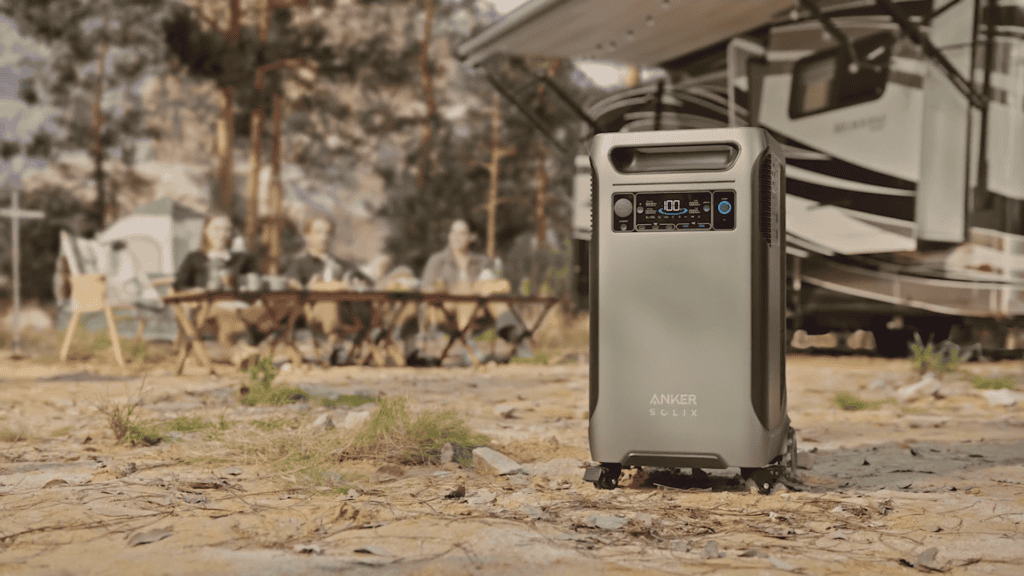
- Credit: ANKER
It’s Monday Morning, the Power Just Went Out. Again.
Coffee’s brewing, your laptop’s at 40%, and the lights flicker once before the whole house goes dark. No storm warning. No backup plan. Just you, a phone at 17%, and a power bank that gave up weeks ago.
If that scenario makes your stomach drop, you’re not alone. Between aging grid infrastructure, more frequent extreme weather, and electricity rates that keep climbing, going even a few hours without power has real consequences — spoiled food, disrupted work, medical equipment that needs to stay on.
That’s the gap solar-powered generators are built to fill. They’ve come a long way from the loud, fume-spewing gas units most people picture. The current generation runs silent, charges from the sun or a wall outlet, and — in the case of the biggest models — can genuinely keep a house running through a multi-day outage.
They’re not interchangeable, though. Capacity, output, charging speed, and battery chemistry vary enormously between models, and a unit built for weekend camping won’t do much for a whole-home outage (and vice versa — you don’t need a 130-lb home battery to charge a phone at a campsite).
We compared specs, independent testing data, and verified manufacturer documentation across the current lineup to build this list. Here are the seven solar generators worth your money in 2026, organized by what they’re actually best at.
Quick Answer
- Best Overall / Whole-Home Backup: Anker SOLIX F3800
- Best for Off-Grid Living: Jackery Explorer 3000 Pro
- Best for Fast Charging: EcoFlow Delta 2 Max
- Best for Emergencies (Indoor-Safe): Geneverse HomePower TWO PRO
- Best for Camping & Overlanding: Jackery Solar Generator 2000 Pro
- Best All-Purpose / Everyday Use: Anker SOLIX F1200 (PowerHouse 757)
- Best Ultra-Portable / Minimalist Travel: BLUETTI EB3A
Comparison Table: Top 7 Solar Generators
Quick Tip: Amazon stock changes often! If a product isn’t available, scroll to the review section where we’ve included links to buy from the brand’s official store.
Image | Generator Name | Power Output | Battery Capacity | Rating | Price |
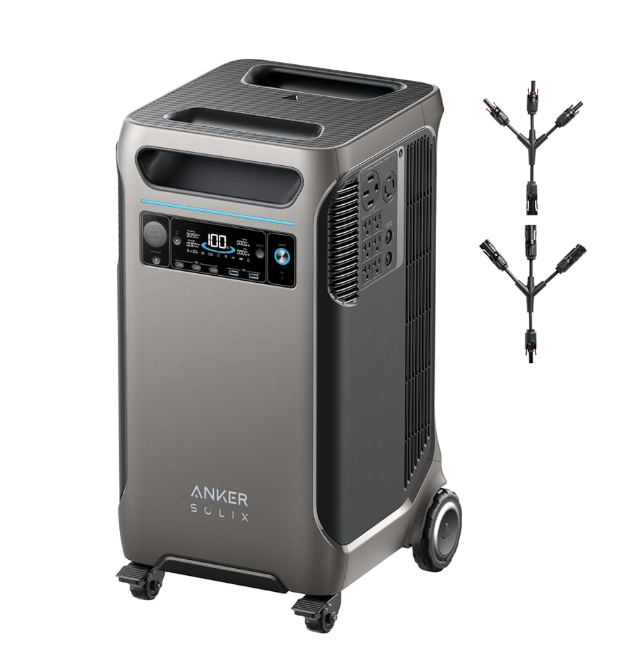 | 6,000W | 3,840Wh | 4.5/5 | ||
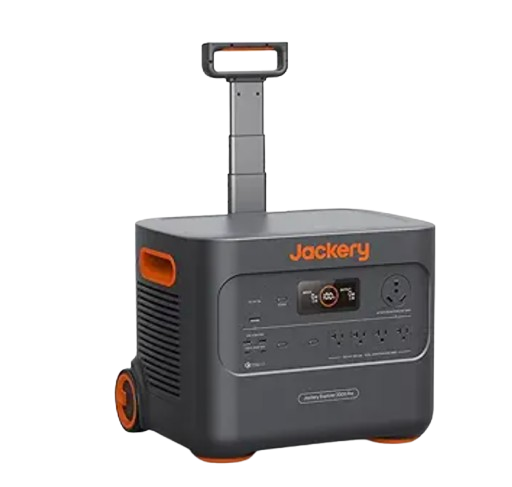 | 3,000W | 3,024Wh | 4.5/5 | ||
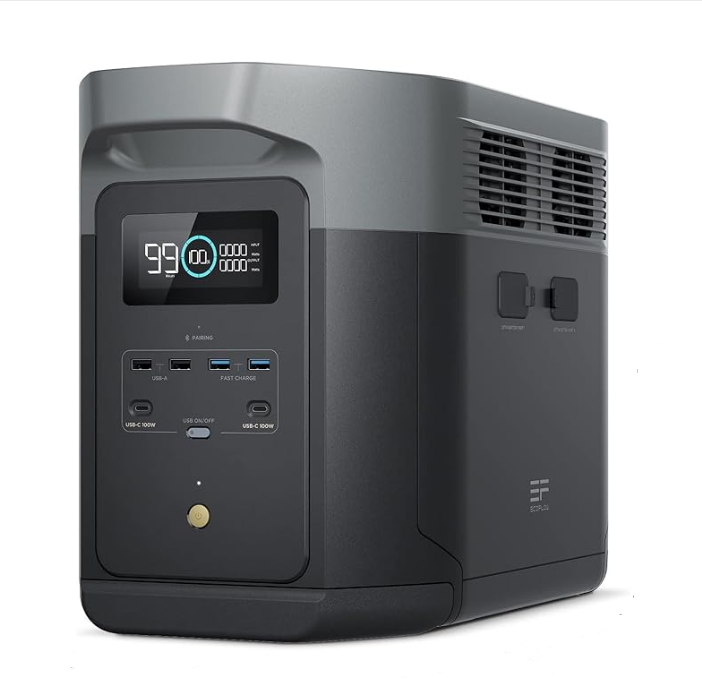 | 2,400W | 2,048Wh | 4.6/5 | ||
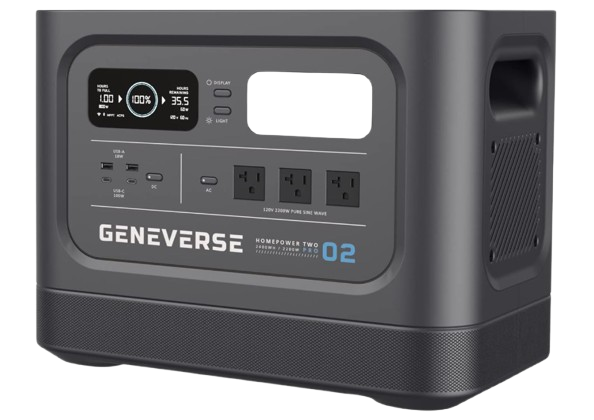 | 2,200W | 2,419Wh | 3.5/5 | ||
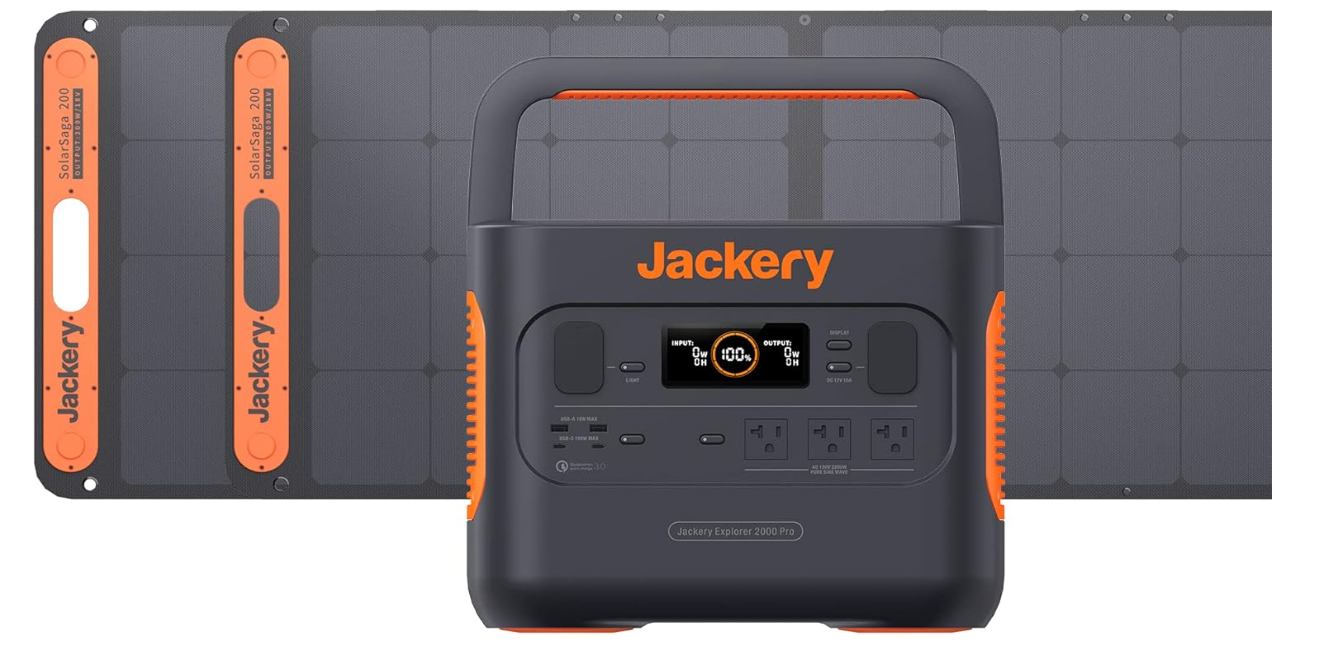 | 2,200W | 2,160Wh | 4.5/5 | ||
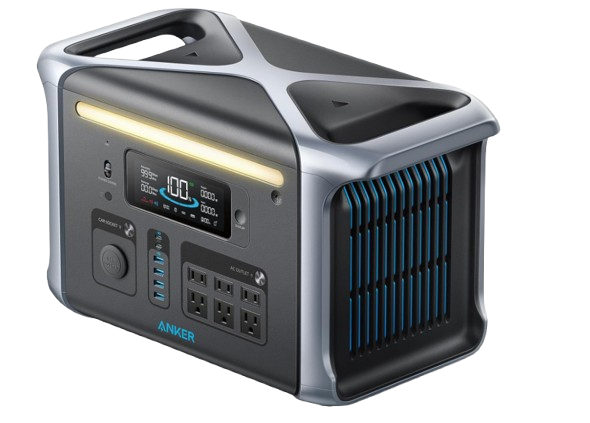 | 1,800W | 1,229Wh | 4/5 | ||
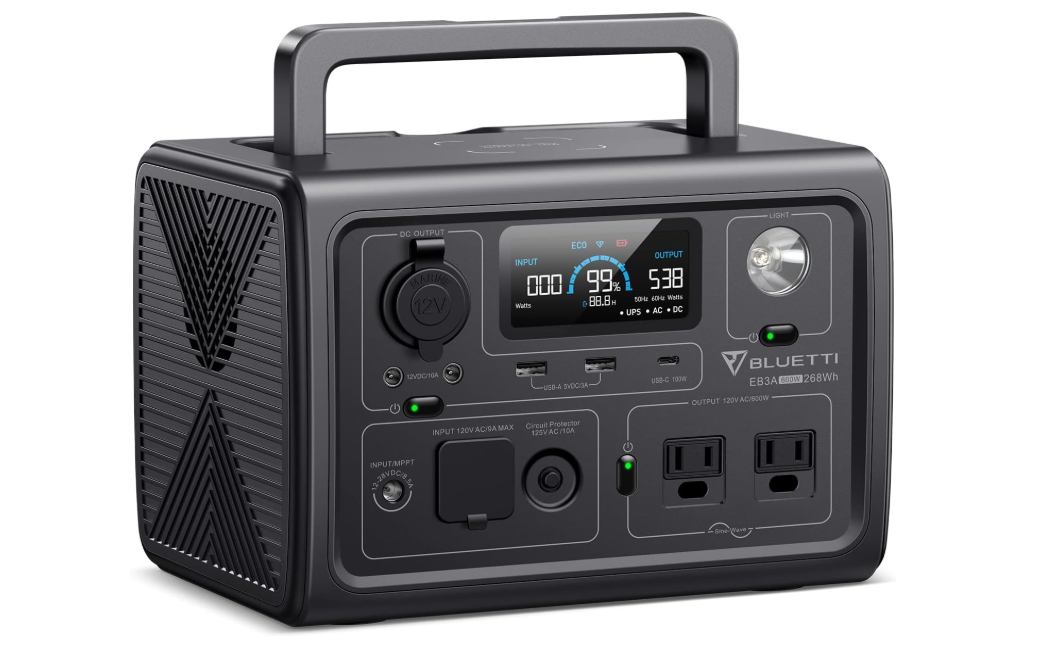 | 600W | 268Wh | 4.2/5 |
If one unit on this list can actually replace a fraction of your home’s electrical panel, it’s this one. The F3800 pairs 6,000W of continuous output with dual-voltage support (120V/240V), which is what lets it run 240V appliances like electric dryers, well pumps, and central AC — something most portable power stations simply can’t do.
Pros
- Whole-home backup capable with 120V/240V dual-voltage output
- Expandable up to 53.8 kWh across multiple battery packs
- Fast solar charging (up to 2,400W input)
- Direct EV charging via NEMA 14-50 port
- LiFePO₄ battery rated for 3,000+ cycles and a 10-year design life
- Smart app control via Wi-Fi/Bluetooth
cons
- At 132 lbs, it needs its built-in wheels — this isn't a one-hand carry
- True whole-home UPS switching requires the separately-sold Home Power Panel
- Overkill (and overpriced) if you only need to keep a fridge and some lights on
At its base 3,840 Wh capacity, the F3800 comfortably runs refrigerators, window AC units, and even EV charging without breaking a sweat. It ships with 6 AC outlets, 3 USB-C ports (100W each), 2 USB-A ports, and a 12V car socket — enough to run a genuinely full load simultaneously.
The bigger story is the ecosystem. Pair it with Anker’s optional Home Power Panel and it becomes a real automatic-transfer backup system, switching over during an outage with a reported interruption too brief to notice on a TV or router. Add expansion batteries and you can scale from a one-day backup to roughly two weeks of essential power.
One thing worth knowing before you buy: Anker has since released the F3800 Plus, a refreshed version with higher solar input (3,200W vs. 2,400W) and compatibility with fuel generator input. If maximum solar charging speed matters to you, it’s worth comparing the two before committing.
Key Specifications
- Battery Capacity: 3,840 Wh base (LiFePO₄), expandable to 53.8 kWh
- Weight: 132 lbs (60 kg), built-in wheels
- Ports: 6× AC outlets, 3× USB-C (100W), 2× USB-A, 1× car port, NEMA 14-50 and L14-30 outlets
- Warranty: 5 years, 10-year design lifespan
- Who should buy it: Homeowners who want real whole-home backup, RVers who need 240V output, off-grid builders planning to scale up over time
- Who should skip it: Anyone who just needs to keep a phone and a few lights on — you're paying for capacity you won't use
Get yours now on Amazon and secure your energy independence.
Want to learn more about Anker Solix F3800? Read our full Anker Solix f3800 Review here.
For RV life, extended camping, or serious emergency prep, the Explorer 3000 Pro hits a sweet spot most whole-home systems miss: enough power to run demanding appliances, without the bulk of a 130-lb unit.
Pros
- Powers nearly all home and RV appliances at 3,000W continuous
- Fast recharge — as low as 2.4 hours via AC)
- Very quiet operation
- Straightforward display and controls
- 25A AC outlet for heavier RV loadst
cons
- At 62.8 lbs, it's not a one-person lift without the wheels
- No built-in LED light or dedicated cable storage
The 3,000W pure sine wave output means it can run demanding gear — portable AC units, electric grills, RV appliances via the 25A outlet — that trips up smaller units. Recharge speed is a genuine strength: full via AC in about 2.4 hours, or 3–4 hours with the right solar panel setup.
Battery shelf life is the underrated feature here. Units that sit unused for months without losing meaningful charge matter a lot for emergency prep, where you want power ready the one time you actually need it.
Key Specifications
- Battery Capacity: 3,024 Wh, 3,000W pure sine wave AC output
- Weight: 62.8 lbs (28.5 kg), wheels and telescoping handle
- Ports: 5× AC outlets, 1× 25A AC outlet, 2× USB-C, 2× USB-A, 1× car/DC
- Who should buy it: RVers, overlanders, off-grid households needing serious backup without whole-home bulk
- Who should skip it: Casual weekend campers who'll rarely draw more than a few hundred watts
Get yours now on Amazon and stay powered wherever the road takes you.
Want to learn more about Jackery 3000 Pro? Read our full Jackery 3000 Pro Review here.
If waiting hours for a recharge defeats the purpose of “backup power” for you, the Delta 2 Max solves that problem directly: 0–80% in about 43 minutes on AC power, which is dramatically faster than most units in its capacity class.
Pros
- Recharges 0–80% in roughly 43 minutes via AC
- 2,400W continuous output (3,400W with X-Boost) handles large appliances
- Expandable to 6,144 Wh with add-on batteries
- App-based remote monitoring and control
- Relatively compact at 50 lbs for its output class
cons
- Lower base capacity (2,048 Wh) than the Jackery or Anker picks above
- No wheels or carry handle — it's a lift-and-carry unit
At just under 50 lbs, it’s more portable than the whole-home options on this list while still powering multiple heavy-duty devices at once. X-Boost technology pushes usable output to 3,400W by intelligently managing voltage for power-hungry appliances that would otherwise trip overload protection.
Worth knowing: EcoFlow’s newer Delta 3 Max line has since launched at a lower starting price with a refined form factor. The Delta 2 Max remains a strong buy — its accessory ecosystem (extra batteries, alternator charger, transfer switch) is more mature and battle-tested — but it’s fair to compare both before deciding.
Key Specifications
- Battery Capacity: 2,048 Wh (expandable to 6,144 Wh with extra batteries)
- Weight: 50 lbs (23 kg)
- Ports: 6× AC outlets, 2× USB-A, 2× USB-C, car/DC, dual solar input
- Cycle Life: 3,000 cycles to 80% capacity
- Who should buy it: Anyone who needs power back online fast — workshops, field operations, unpredictable outages
- Who should skip it: Buyers prioritizing maximum base capacity over charge speed
Get yours now on Amazon and enjoy ultra-fast, on-demand energy when you need it most.
Want to learn more about Ecoflow Delta 2 Max? Read our full Ecoflow Delta 2 Max Review here.
Not every backup power source is safe to run indoors. Fuel generators produce carbon monoxide and noise that rule them out for apartments and bedrooms. The HomePower TWO PRO is built specifically to be used inside — no fumes, minimal noise — which matters most in exactly the moment you’d need it.
Pros
- Genuinely safe for indoor use — no fumes or exhaust
- Push-button startup with a simple interface
- Strong size-to-power ratio for its category
cons
- Not expandable — what you buy is the ceiling on your capacity
- Fewer ports than some competitors in this range
At 2,419 Wh and 2,200W output, it strikes a workable balance for a home emergency kit: enough to run a refrigerator, lighting, phone charging, and medical equipment like CPAP machines simultaneously, without needing a garage or shed to store it in.
Key Specifications
- Battery Capacity: 2,419 Wh (non-expandable)
- Weight: 61.5 lbs (27.9 kg)
- Ports: 3× AC outlets, 2× USB-A, 2× USB-C, 1× car outlet, 1× solar input
- Who should buy it: Apartment or condo dwellers, anyone who needs power stored inside living space, CPAP/medical device users
- Who should skip it: Buyers who expect to scale capacity later — this unit doesn't expand
Get yours now on Amazon and rest easy knowing you’re prepared for any outage.
Want to learn more about Geneverse HomePower TWO PRO? Read our full Geneverse HomePower TWO PRO review here.
5
Best for Camping & Overlanding
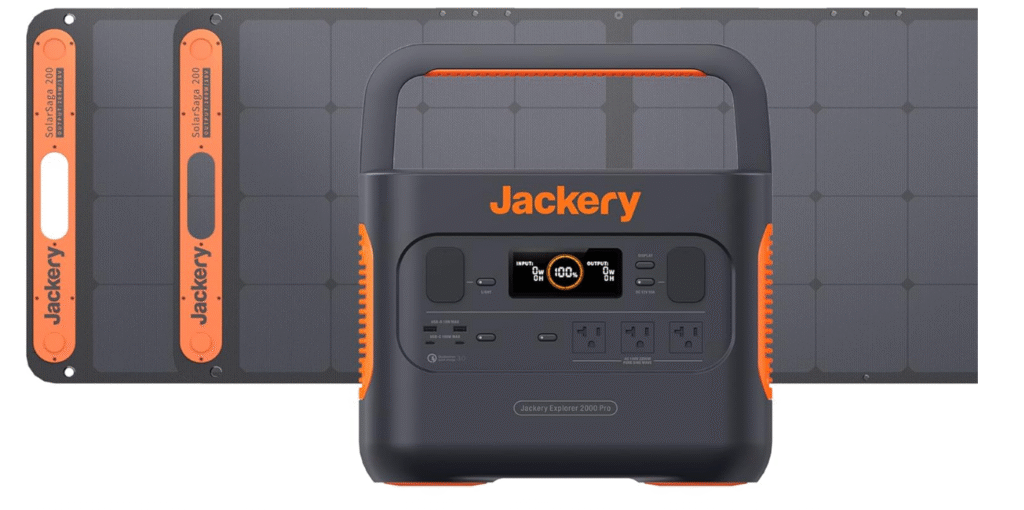
Jackery Solar Generator 2000 Pro
For campsite setups, van life, and overland trips, the 2000 Pro balances real output against a manageable footprint — a genuinely different use case from the ultralight travel pick further down this list.
Pros
- 2,200W continuous / 4,400W surge handles coolers, induction cooktops, and small AC units
- Recharges in about 2 hours via AC, 2.5 hours with a full 6-panel SolarSaga setup
- At 43 lbs, it's manageable to load in and out of a vehicleg
- MPPT solar charging with reported 97% conversion efficiency
cons
- Not expandable — capacity is fixed at 2,160 Wh
- Six solar panels are a lot to deploy and angle at a remote campsite
Jackery’s own successor line, the 2000 Plus, has since launched with modular expansion and lighter solar panels — worth a look if you specifically want to scale capacity over time. But the 2000 Pro remains a proven, widely-reviewed choice for anyone who wants serious camping power without the modular complexity.
Key Specifications
- Battery Capacity: 2,160 Wh, 2,200W AC output (4,400W surge)
- Weight: 43 lbs (19.5 kg)
- Ports: 3× AC outlets, 2× USB-A, 2× USB-C, 1× car outlet, solar/DC input
- Who should buy it: Campers, van-lifers, and overlanders who need to run a fridge or small appliances off-grid for days at a time
- Who should skip it: Anyone who wants to expand capacity later — look at the 2000 Plus instead
Get yours now on Amazon and Power your next adventure
Want to learn more about Jackery 2000 Pro? Read our full Jackery 2000 Pro review here.
Not every household needs whole-home backup or off-grid capability — sometimes you just want something reliable for short outages, weekend projects, and everyday devices. The F1200 covers that ground well.
Pros
- 1,800W output handles most everyday appliances and electronics
- LiFePO4 battery rated for 3,000+ cycles
- Compact, durable build suited to grab-and-go use
- Solid port selection for the size class
cons
- Not expandable for bigger future power needs
- 1,229 Wh capacity limits runtime for higher-draw appliances
With 3,000+ rated cycles, this is a station you can expect to use daily for years without meaningful capacity loss — a real advantage for anyone using it as a rotating everyday backup rather than an emergency-only unit.
Key Specifications
- Battery Capacity: 1,229 Wh
- Weight: 43.9 lbs
- Ports: 6× AC outlets, 2× USB-A, 2× USB-C (100W), 1× car outlet, 1× solar input
- Who should buy it: Households wanting dependable short-outage coverage, WFH setups, weekend campers
- Who should skip it: Anyone needing multi-day capacity or 240V output — step up to the F3800
Get yours now on Amazon and power your day effortlessly!
Want to learn more about Anker Solix F1200? Read our full Anker Solix F1200 Review here.
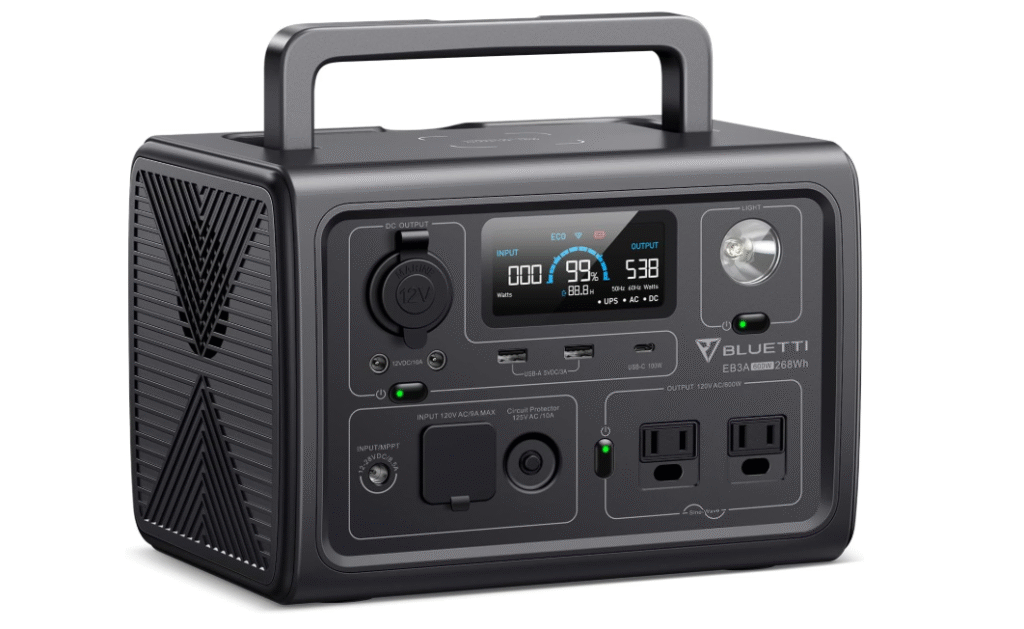
When every pound matters, the EB3A is the pick. It’s not built to replace home backup power — it’s built to disappear into a backpack and still be genuinely useful.
Pros
- Extremely lightweight at just over 10 lbs
- Fast recharge — under 2 hours via AC or solar
- LiFePO4 battery rated for 2,500+ cycles
- Built-in LED light with SOS mode for emergencies
cons
- 268 Wh capacity rules out large appliances — this is for essentials only
Despite the small footprint, the 600W output and 268Wh capacity are enough to run laptops, lights, fans, and phones, or a mini fridge for a limited stretch. That’s a real ceiling to be clear-eyed about: this isn’t a substitute for the larger units on this list if your goal is running a full refrigerator or medical equipment for days.
Key Specifications
- Battery Capacity: 268 Wh LiFePO4 (2,500+ cycles)
- Weight: 10.1 lbs (4.6 kg)
- Ports: 2× AC, 2× USB-A, 1× USB-C (100W), 1× DC car port, 1× wireless charger
- Who should buy it: Minimalist hikers, backpackers, and travelers who need to charge devices, not appliances
- Who should skip it: Anyone planning to power a fridge, medical device, or multi-day home outage
FAQ
For a full roundup of today’s best solar generators overall, check out our complete guide. + If your main goal is to power appliances during outages, see our home backup generator guide.
Share
Related Articles
How to Build a Solar Powered Generator (Step-by-Step Guide)
How Does a Solar Powered Generator Work?