Skip to content
Home » Best Picks » 7 Best Solar Generators for Home Backup in 2026
- Updated August 21, 2026
7 Best Solar Generators for Home Backup in 2026

When the Grid Fails, What Powers Your Home?
A storm knocks out power for six hours. Or six days. Either way, the question is the same: what keeps your fridge cold, your phone charged, and your medical equipment running until the lights come back on?
Solar generators have become a serious answer to that question — not a novelty, but a practical alternative to noisy, fume-producing gas generators for a growing number of homeowners. The right unit can run your essentials silently, recharge from sunlight or a wall outlet, and sit ready for months without maintenance.
The tricky part is that “solar generator for home backup” covers an enormous range of products — from 1,200 Wh compact units that’ll carry you through a short outage to 4,000+ Wh systems built to integrate directly into your home’s electrical panel. Picking the wrong size means either overpaying for capacity you’ll never use, or discovering mid-blackout that your unit can’t run what you actually need.
We compared capacity, real output, charging speed, expandability, and battery chemistry across the current lineup from Jackery, EcoFlow, Bluetti, Anker, and Goal Zero to build this list — organized by what each one is actually built to do.
Quick Answer
- Best for Expandable Backup: Jackery Explorer 2000 Plus
- Best Value Whole-Home Backup: EcoFlow Delta Pro
- Best Smart Home Integration: EcoFlow Delta Pro 3
- Best Modular System: Bluetti AC300 + B300S
- Best Plug-and-Play Setup: Jackery Explorer 3000 Pro
- Best Compact Backup: Anker 757 PowerHouse
- Best for Multi-Day Outages: Goal Zero Yeti 6000X
Quick Comparison Table: 7 Best Solar Generators for Home Backup in 2026
Image | Generator Name | Power Output | Battery Capacity | Rating | Price |
 | 3,000W | 2,042 → 24kj Wh | 4.5/5 | ||
 | 3,000–3,600W | 3,600 → 25k Wh | 4.5/5 | ||
 | 4,000W | 4,096WH | 4.5/5 | ||
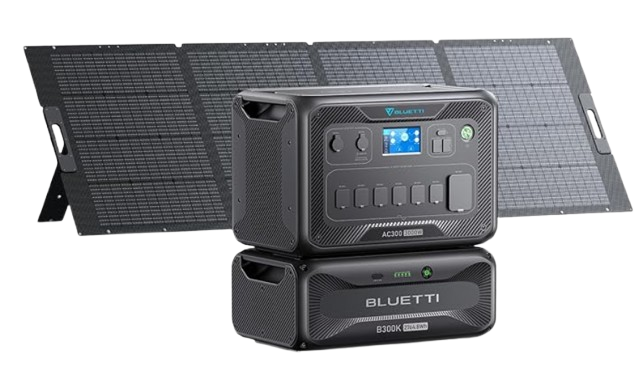 | 3,000W | 3,072 → 12k Wh+ | 4.3/5 | ||
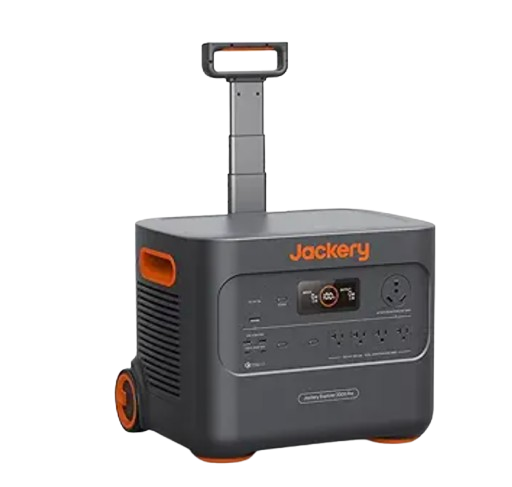 | 3,000W | 3,024Wh | 4.5/5 | ||
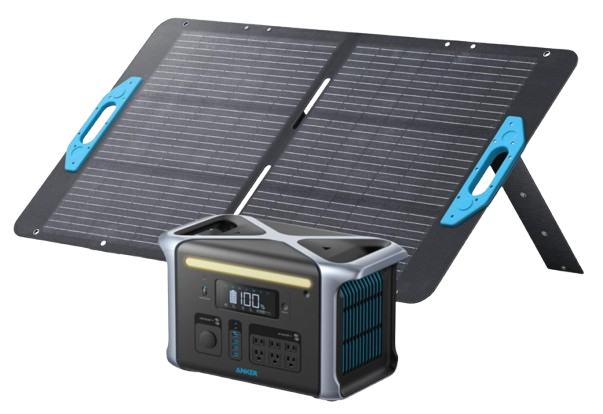 | 1,500W | 1,229Wh | 4.6/5 | ||
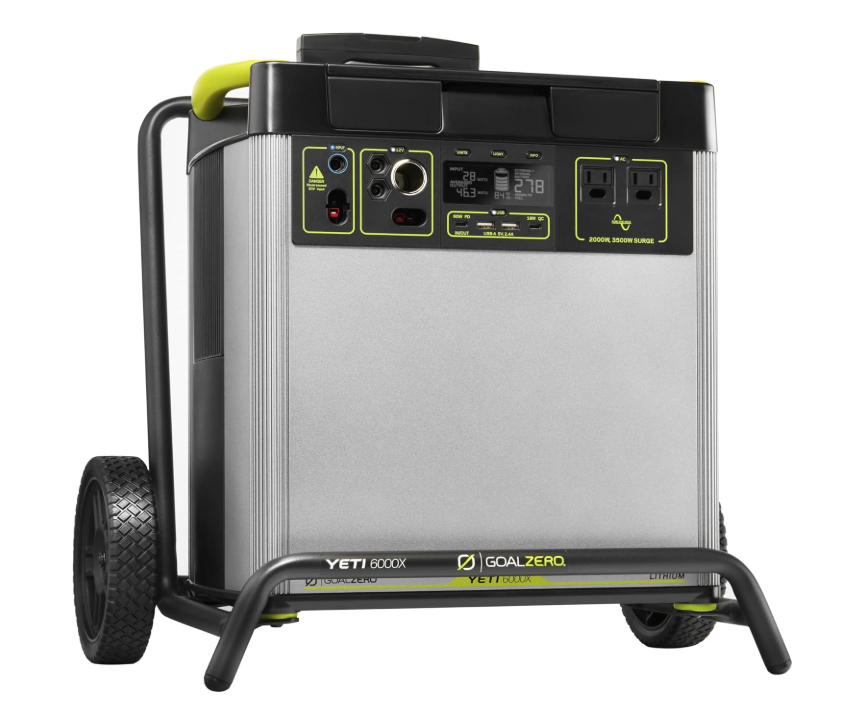 | 2,000W | 6,000Wh | 4.5/5 |
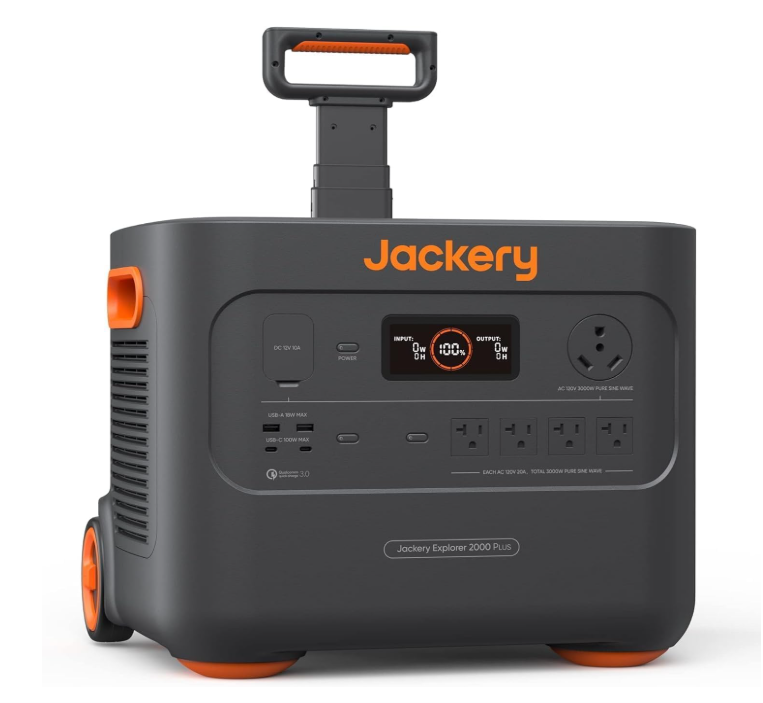
If you want a home backup system you can start small with and grow over time, the Explorer 2000 Plus is built exactly for that. It runs clean and silent, which makes it a reasonable fit for indoor use in smaller homes or apartments, and its LiFePO₄ battery is rated for over 4,000 cycles — meaningfully longer than most other picks here.
Pros
- 2,042Wh base capacity, expandable up to roughly 24kWh
- 3,000W inverter handles fridges, freezers, and sump pumps
- LiFePO₄ battery rated for 4,000+ cycles
- Fast solar input (up to 1,200W across 6 panels)
- Quiet operation, safe for indoor use
cons
- Cost adds up quickly once you start adding expansion batteries
- At 61.5 lbs for the base unit, it's bulky for a small apartment
At its base capacity, the 2000 Plus comfortably runs a refrigerator, Wi-Fi router, LED lighting, and a CPAP machine overnight. Add up to five battery packs and you’re looking at nearly 24,000 Wh — enough to keep essentials running for days during an extended outage, not just hours.
The 3,000W pure sine wave inverter also handles higher-draw appliances like microwaves, washing machines, and well pumps, which puts it a step above units limited to lighter loads. Combined with fast solar charging across up to six panels, it’s a genuinely scalable system rather than a fixed-capacity box.
Key Specifications
- Battery Capacity: 2,042 Wh (expandable to ~24kWh)
- Output Power: 3,000W continuous, 6,000W surge
- Battery Type: LiFePO₄, 4,000+ cycles
- Solar Input: Up to 1,200W (6 panels)
- Weight: 61.5 lbs (base unit)
- Who should buy it: Households that want to start with essentials coverage and scale up capacity as budget allows
- Who should skip it: Anyone who wants a single fixed-price unit without ongoing expansion purchases
Get yours now on Amazon and power your home safely and silently.
Want to learn more about Jackery 2000 Plus? Read our full Jackery 2000 Plus Review here.
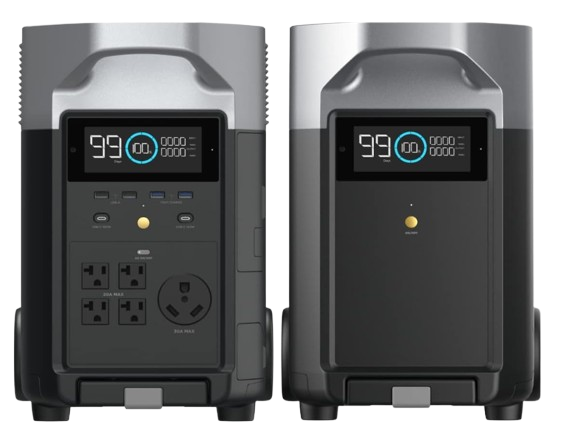
The original Delta Pro has been on the market since 2021 and remains one of the better value picks for whole-home-adjacent backup — a proven track record at a lower price than its newer sibling below.
Pros
- 3,600Wh base capacity, expandable to 25kWh
- 3,600W output (7,200W surge) handles most heavy appliances
- 240V support for dryers, AC units, and well pumps (with the Double Voltage Hub accessory)
- LiFePO₄ battery rated for 6,500+ cycles — among the longest on this list
- Years of real-world reliability data from a large existing user base
cons
- 240V output requires an additional accessory, unlike native-240V units
- The Smart Home Panel needed for true automatic backup is sold separately
- At 99 lbs, it's not something you're moving around solo
The Delta Pro’s core appeal in 2026 is value: it typically sells for several hundred dollars less than the newer Delta Pro 3 while still delivering comparable base capacity and a longer-rated cycle life. If you don’t specifically need native 240V output from a single unit, or you’re already invested in EcoFlow’s expansion battery ecosystem, the original Delta Pro remains a legitimate pick rather than an outdated one.
Paired with the EcoFlow Smart Home Panel, it can switch your home to battery power automatically during an outage. Without it, you’re running extension cords to the unit’s outlets — which works, but limits how many circuits you can cover at once.
Key Specifications
- Battery Capacity: 3,600 Wh (expandable to 25kWh)
- Output Power: 3,600W continuous, 7,200W surge
- Battery Type: LiFePO₄, 6,500+ cycles
- Solar Input: Up to 1,600W (firmware-updated from earlier 600W spec — confirm current rating before buying)
- Weight: 99 lbs
- Recharge Time: Roughly 1.8 hours via AC (X-Stream charging)
- Who should buy it: Budget-conscious buyers who want proven reliability and don't need native 240V
- Who should skip it: Anyone building a from-scratch whole-home system who wants 240V without extra accessories — see the Delta Pro 3 below
Get yours now on Amazon and Power everything from lights to laundry during blackouts
Want to learn more about ECOFLOW Delta Pro? Read our full EcoFlow Delta Pro Review here.
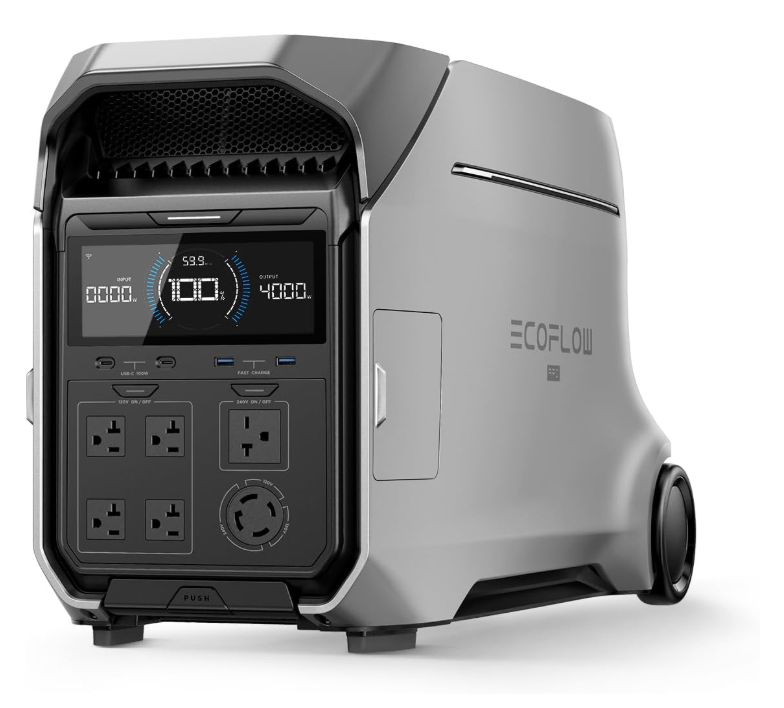
The Delta Pro 3 is EcoFlow’s newer flagship, and the upgrades over the original Delta Pro are real: native 120V/240V output from a single unit, a larger 4,096Wh battery, and dramatically faster charging.
Pros
- 4,096Wh capacity, expandable up to 48kWh
- 4,000W continuous output (8,000W surge) runs nearly any household appliance
- Native 120V/240V output — no separate voltage accessory needed
- App-based load prioritization and full home circuit control
- Recharges 0–80% in roughly 50 minutes, far faster than the original Delta Pro
cons
- Meaningfully more expensive than the original Delta Pro
- Full smart-home features depend on a stable Wi-Fi connection
- Still requires the separately-sold Smart Home Panel 2 for true automatic whole-home switching
With roughly 4kWh of storage, the Delta Pro 3 comfortably runs a refrigerator, microwave, lighting, modem, TV, and medical devices simultaneously. The standout feature is smart load prioritization — you set which circuits matter most during an outage, and the system distributes power accordingly rather than running until it simply cuts out.
Its 48kWh expansion ceiling is nearly double the original Delta Pro’s, which matters if you’re planning for multi-day outages rather than just overnight coverage. The tradeoff is cost — expect to pay a real premium over the original for these upgrades, plus the Smart Home Panel 2 if you want automatic switching.
Key Specifications
- Battery Capacity: 4,096 Wh (expandable to 48kWh)
- Output Power: 4,000W continuous, 8,000W surge
- Battery Type: LiFePO₄, 6,000+ cycles
- Solar Input: Up to 2,600W (dual PV input)
- Weight: 105 lbs
- Recharge Time: ~50 minutes to 80% via AC
- Who should buy it: Homeowners who want native 240V and the fastest recharge in EcoFlow's lineup
- Who should skip it: Buyers on a tighter budget who don't need 240V from a single unit — the original Delta Pro covers most of the same ground for less
Get yours now on Amazon and Keep your entire home running
Want to learn more about ECOFLOW Delta Pro 3? Read our full EcoFlow Delta Pro 3 Review here.
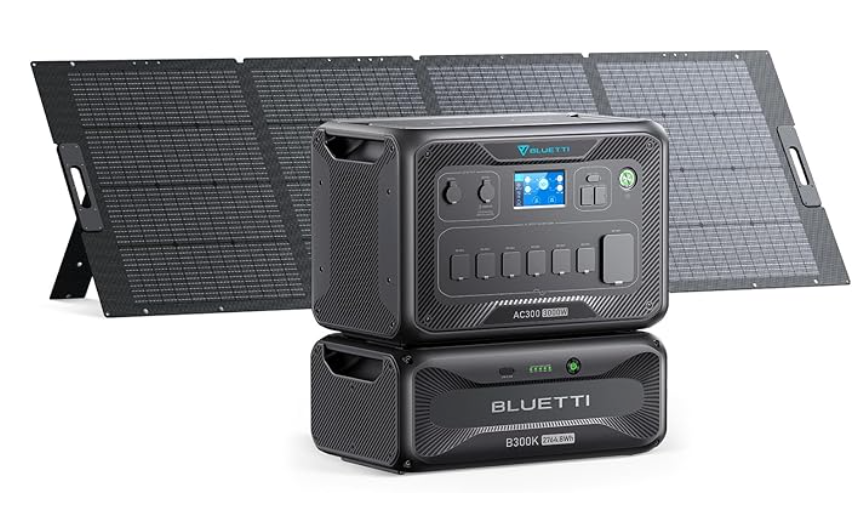
If you’d rather build a backup system piece by piece than commit to one fixed-capacity box, the AC300 + B300S combo is designed exactly for that. The AC300 inverter unit has no internal battery of its own — it connects to B300S battery packs, each holding 3,072Wh, so you scale capacity by adding batteries rather than replacing the whole system.
Pros
- Fully modular — expandable from roughly 3kWh to 12.3kWh+
- 3,000W inverter (6,000W surge) covers most household appliances
- Split-phase 240V support with the Bluetti Fusion Box accessory
- LiFePO₄ battery rated for 3,500+ cycles
- Built-in UPS function switches to battery automatically during an outage
cons
- Reaching full capacity requires buying multiple separate units
- Setup takes longer than an all-in-one system out of the box
The 3,000W inverter handles fridges, deep freezers, sump pumps, and even mini-split AC units without issue, and pairing it with the Fusion Box unlocks 240V support for well pumps or electric dryers. The built-in UPS mode is a real convenience — no manual switchover during a blackout, and you can monitor the whole setup through Bluetti’s app.
The modular approach makes the most sense for households planning to grow their system over time, rather than buyers who want to make one purchase and be done.
Key Specifications
- Battery Capacity: 3,072 Wh per battery (up to 12,288 Wh total)
- Output Power: 3,000W continuous, 6,000W surge
- Battery Type: LiFePO₄, 3,500+ cycles
- 240V Support: Yes, with Fusion Box accessory
- Weight: 47.6 lbs (AC300 unit alone)
- Who should buy it: Buyers who want to scale their system incrementally rather than all at once
- Who should skip it: Anyone who wants a single-box solution without assembling a system
Get yours now on Amazon and Customize your power, expand as you grow
Want to learn more about BLUETTI AC300 + B300S? Read our full BLUETTI AC300 + B300 Review here.
Note: Depending on inventory, Bluetti may bundle the AC300 with either the B300S or B300K — both offer identical power, safety, and expandability
For buyers who don’t want to think about wiring, panels, or modular expansion, the Explorer 3000 Pro is the straightforward option: unpack it, plug in your appliances, and you’re covered.
Pros
- 3,000W output (6,000W surge) handles most household gearst household gear
- 3,024Wh capacity in a single all-in-one unit
- No setup complexity — genuinely plug-and-play
- Built-in wheels and telescoping handle for mobility
cons
- Fixed capacity — no expansion path if your needs grow
- Higher price per watt-hour than modular alternatives
There’s no wiring, no separate panels, and no learning curve — you’re protected as soon as it’s charged. That simplicity comes at a cost: unlike the Jackery 2000 Plus above or the Bluetti system, you can’t add batteries later if your power needs increase. What you buy is what you have.
It’s also mobile enough to double as a portable unit for weekend trips or a cabin, thanks to the wheels and handle — a genuine advantage if you want one system that covers both home backup and occasional off-grid use.
Key Specifications
- Battery Capacity: 3,024 Wh
- Output Power: 3,000W continuous, 6,000W surge
- Battery Type: LiFePO₄, 2,000+ cycles
- Weight: 63.9 lbs
- Mobility: Built-in wheels and handle
- Who should buy it: Buyers who want maximum simplicity and don't anticipate needing more capacity later
- Who should skip it: Anyone planning to scale up power needs over time — look at an expandable system instead
Get yours now on Amazon and just plug in and power your home.
Want to learn more about Jackery Explorer 3000 Pro? Read our full Jackery Explorer 300 Pro Review here.
Not every household needs a multi-day whole-home system. If you mainly want to keep a fridge, router, and a few lights running through a shorter outage, the 757 PowerHouse is sized appropriately — and priced accordingly.
Pros
- 1,229Wh battery, well suited to short-term backup
- 1,500W output (2,400W surge) covers key appliances
- LiFePO₄ battery rated for 3,000+ cycles
- Recharges 0–80% in about 1 hour
- Compact and durable enough to double as a travel unit
cons
- Not expandable
- Limited capacity for larger homes or extended outages
With a 1,229Wh battery and 1,500W inverter, it can run a refrigerator for several hours, keep internet access alive, or power medical equipment in a pinch — without taking up a garage’s worth of space or budget. Its fast recharge (0–80% in about an hour) means it can also be topped back up between outages if power is intermittent.
Key Specifications
- Battery Capacity: 1,229 Wh
- Output Power: 1,500W continuous, 2,400W surge
- Battery Type: LiFePO₄, 3,000+ cycles
- Weight: 43.8 lbs
- Recharge Time: 0–80% in 1 hour
- Solar Input: Up to 300W
- Who should buy it: Apartments, small homes, or anyone who mainly needs to cover short outages
- Who should skip it: Larger households expecting multi-day outages or high simultaneous loads
Get yours now on Amazon Stay powered, stay connected
Want to learn more about Anker 757 PowerHouse? Read our full Anker 757 PowerHouse Review here.
The Yeti 6000X has the largest single-unit capacity on this list at 6,071Wh — genuinely enough to run a full-size refrigerator for well over 100 hours. Before recommending it, though, there’s a real limitation worth being upfront about.
Pros
- Massive 6,071Wh capacity for extended, multi-day backup
- 2,000W inverter (3,500W surge) supports large loads
- Compatible with Goal Zero's Home Integration Kit for direct circuit connection
- Silent, emission-free operation
cons
- Uses Li-ion NMC battery chemistry, not LiFePO4 — rated for roughly 500 cycles to 80% capacity, well below the 2,000–6,500+ cycle ratings of the LFP batteries in every other pick on this list
- Heavy at 106 lbs, with limited portability
- Goal Zero's newer product generation (the Yeti PRO line) has already moved to LFP chemistry, which is worth knowing before buying into the older platform
A note on battery chemistry: every other generator on this list uses LiFePO4 (LFP) batteries, which last longer and handle heat better than the NMC chemistry in the Yeti 6000X. In practical terms, NMC’s roughly 500-cycle rating means that if you used this unit’s full capacity daily, you could see meaningful capacity loss within a couple of years — versus a decade or more for the LFP units above. If you’re cycling the battery only occasionally (a few times a year during actual outages), this matters less. If you’re planning to use it as a regular daily-cycling home battery, it’s a real consideration.
That tradeoff aside, the raw capacity here is genuinely useful for rural or storm-prone areas facing multi-day outages, and it pairs with Goal Zero’s Home Integration Kit to connect directly to up to four home circuits.
Key Specifications
- Battery Capacity: 6,071 Wh
- Output Power: 2,000W continuous, 3,500W surge
- Battery Type: Li-ion NMC, ~500 cycles to 80% capacity
- Weight: 106 lbs
- Recharge Time: ~12 hours via AC wall charger
- Home Integration: Yes, sold separately
- Who should buy it: Buyers prioritizing maximum single-unit capacity for occasional multi-day outages, and who are comfortable with the shorter battery lifespan tradeoff
- Who should skip it: Anyone planning frequent, regular use — an LFP-based alternative like the Delta Pro or Explorer 2000 Plus will last substantially longer under daily cycling
Get yours on Goal Zero and get Serious capacity, serious backup
Want to learn more about Goal Zero Yeti 6000X? Read our full Goal Zero Yeti 6000X Review here.
FAQ
True whole-home backup — running your entire electrical panel — typically requires a permanently installed solar-plus-battery system, not a portable generator. For backing up essential circuits (fridge, lights, Wi-Fi, and a few outlets), a 3,000–4,000 Wh expandable unit like the Delta Pro 3 or Jackery 2000 Plus is a realistic middle ground.
Yes. Every unit on this list, even the smaller 1,229 Wh Anker 757, can run a standard refrigerator for multiple hours, and the larger units can sustain one for days, especially with solar recharging during daylight.
For regular or repeated use, yes — LFP batteries handle far more charge cycles before losing capacity and perform more consistently in heat. NMC batteries can still be a reasonable choice for occasional, infrequent backup use where cycle count matters less.
Only if you want automatic switching to battery power during an outage. Without one, you can still use the generator by running extension cords to its outlets — it just requires manual setup each time.
It depends entirely on capacity and load. As a rough guide, a 3,000–4,000 Wh system running a refrigerator, some lighting, and basic electronics can typically last 1–2 days without recharging, longer with solar input during the day.
“Need something that can handle kitchen appliances? Check our best solar generator for refrigerator list.”
Share